Bugle
Ajuga reptans
Wildflowers and Natives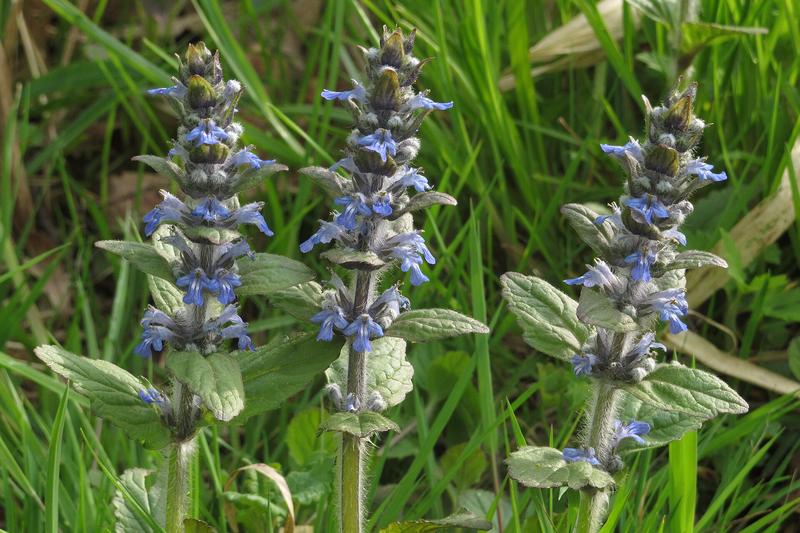
Quick facts
- Watering
- Weekly during dry spells
- Sunlight
- Partial shade to full shade
- Soil
- Moist, well-drained, any pH
- Humans
- Safe
- Cats
- Safe
- Dogs
- Safe
- Height
- 10–20 cm
- Spread
- 60–90 cm
- Spacing
- 30–45 cm apart
- RHS recognition
- Award of Garden Merit
About Bugle
Bugle is a low-growing, mat-forming British native wildflower prized for its spikes of rich blue flowers in spring and attractive evergreen foliage. This hardy perennial spreads readily via runners, making it an excellent ground cover for shady borders, woodland gardens, and beneath trees where little else will thrive. UK gardeners value it for its reliability, wildlife benefits—particularly for early bees—and the range of cultivars with bronze, purple, or variegated leaves. It naturalises beautifully in informal settings whilst remaining controllable in smaller gardens with occasional thinning.
UK fact: Bugle has been awarded the RHS Award of Garden Merit and is a familiar sight in British woodlands, hedgerows, and churchyards, where it has been used since medieval times as a medicinal herb to treat wounds and bruises.
Watering Bugle
Once established, bugle is fairly drought-tolerant but performs best with consistent moisture, particularly in spring when flowering. Water weekly during prolonged dry periods, especially if grown in sunnier positions or containers. In typical UK conditions with regular rainfall, supplementary watering is rarely needed except during summer droughts. Avoid waterlogging, though bugle tolerates heavier soils better than many ground covers.
Sunlight requirements
Bugle thrives in partial to full shade, making it ideal for north-facing borders and beneath deciduous trees. It tolerates some morning sun but may scorch in hot, exposed positions, particularly on free-draining soils. In shadier spots, flowering may be slightly reduced but foliage colour intensifies, especially in purple-leaved cultivars.
Soil and feeding
Bugle is unfussy about soil type and thrives in most garden conditions, from clay to loam, provided it doesn't dry out completely. It tolerates a wide pH range from acidic to alkaline (pH 5.5–7.5) and performs particularly well in moisture-retentive soils enriched with organic matter. Heavy clay is acceptable as long as it doesn't become waterlogged in winter. For containers, use a peat-free multipurpose compost with added grit for drainage.
Bugle requires minimal feeding and thrives in average garden soil without supplementary fertiliser. A light mulch of garden compost or leaf mould in autumn provides sufficient nutrients and helps retain moisture. Over-feeding encourages lush foliage at the expense of flowers and can make plants more prone to slug damage.
Pruning Bugle
Deadhead spent flower spikes in early summer to maintain a tidy appearance and prevent self-seeding, though this is optional. Trim back tatty or winter-damaged foliage in early spring before new growth emerges. Control spread by lifting and dividing clumps every 2–3 years or simply pull up unwanted runners at the edges. No other pruning is required.
Propagating Bugle
Bugle is exceptionally easy to propagate by division of established clumps in spring or autumn—simply lift, tease apart rooted sections, and replant immediately. Runners root readily at nodes and can be detached and potted up at any time during the growing season. Seed can be sown in autumn in a cold frame, though cultivars will not come true and division is far more reliable. Cuttings of non-flowering shoots root easily in summer in a mix of compost and grit.
Common problems
Bugle is generally trouble-free but can suffer from powdery mildew in dry conditions or overcrowded plantings—improve air circulation and water during droughts. Slugs and snails occasionally damage young foliage, particularly on purple-leaved varieties. In very wet winters, crown rot may occur in poorly drained soils. The main issue for UK gardeners is controlling its spread, as it can become invasive in ideal conditions, smothering smaller plants, though it's easily pulled up where unwanted.
Spot a problem with your plant? Photograph the affected area using the Loam app and it will suggest the most likely cause and treatment.
Safety
- Humans
- Safe
- Cats
- Safe
- Dogs
- Safe
Toxicity information is for general guidance only.
Seasonal care calendar
Monthly care guide for Bugle in the UK, based on average conditions.
| Month | Care tasks |
|---|---|
| January | No action needed; foliage remains evergreen through winter. |
| February | Check for winter damage and remove any tatty leaves. |
| March | Tidy foliage and apply a light mulch of compost. Divide established clumps if needed. |
| April | Flower spikes begin to emerge; water if conditions are dry. |
| May | Peak flowering period; deadhead spent blooms to prolong display. |
| June | Deadhead remaining flowers and trim back if needed to control spread. |
| July | Water during dry spells; remove unwanted runners at edges. |
| August | Continue watering if dry; take cuttings if propagating. |
| September | Divide congested clumps and replant or pot up divisions. |
| October | Apply autumn mulch of leaf mould or compost around plants. |
| November | Clear fallen leaves from foliage to prevent rot. |
| December | No action needed; plants remain evergreen and dormant. |
Frequently asked questions
- Is bugle invasive in UK gardens?
- Bugle spreads vigorously via runners and can become invasive in ideal conditions, but it's easily controlled by pulling up unwanted growth or dividing clumps every few years. It's perfect for ground cover where you want it to spread, but may overwhelm smaller plants in mixed borders if not managed.
- Why isn't my bugle flowering well?
- Poor flowering is usually due to deep shade, over-feeding, or drought stress during spring. Bugle flowers best in partial shade with consistent moisture. The Loam app can help you track watering and light conditions to optimise flowering, and send reminders for seasonal care tasks.
- Can I grow bugle in a lawn?
- Yes, bugle naturalises well in semi-wild lawns and meadow areas, particularly in shadier spots where grass struggles. It tolerates light foot traffic and infrequent mowing, creating a carpet of blue flowers in spring. Avoid using it in formal lawns that require regular close mowing.
Got a question about growing Bugle that isn't covered here? Ask the Garden Advisor in the Loam app. It knows your saved plants and local conditions.
Related plants
This page was compiled with AI assistance and reviewed by our team. .