Wild Thyme
Thymus polytrichus
Wildflowers and Natives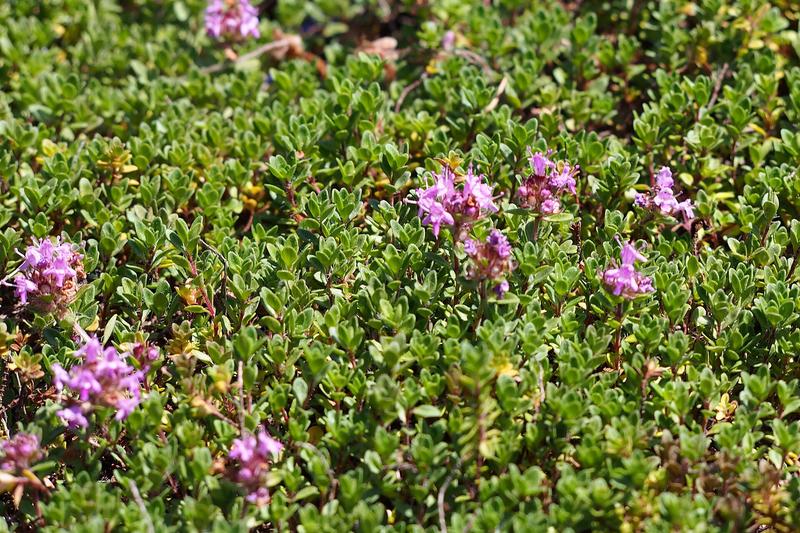
Quick facts
- Watering
- Minimal once established
- Sunlight
- Full sun
- Soil
- Well-drained, poor to moderately fertile
- Humans
- Safe
- Cats
- Safe
- Dogs
- Safe
- Height
- 2–7 cm
- Spread
- 20–45 cm
- Spacing
- 20–30 cm apart
About Wild Thyme
Wild Thyme is a low-growing, mat-forming native perennial that carpets the ground with tiny aromatic leaves and masses of pink-purple flowers in summer. Native to the UK's grasslands, heaths, and coastal cliffs, it thrives in poor, free-draining soils and is a magnet for bees and butterflies. British gardeners prize it for wildlife-friendly rockeries, alpine troughs, lawn alternatives, and the edges of gravel paths where its fragrance is released underfoot. Exceptionally hardy and drought-tolerant once established, it requires minimal care and brings authentic British wildflower character to gardens.
UK fact: Wild Thyme has been used in British folk medicine for centuries, and its flowers were traditionally gathered to make fragrant posies and strewing herbs for medieval floors, releasing their scent when walked upon.
Watering Wild Thyme
Water newly planted Wild Thyme regularly during the first growing season to help roots establish, typically once or twice weekly in dry spells. Once established, it is exceptionally drought-tolerant and requires no supplementary watering in most UK climates, thriving on natural rainfall alone. Overwatering or planting in poorly drained soil causes root rot and decline. In containers, water sparingly only when the compost is completely dry.
Sunlight requirements
Wild Thyme demands full sun to thrive and flower profusely, making it ideal for south-facing rockeries, raised beds, and sunny banks. In the UK, it performs best in open, unshaded positions where it receives at least six hours of direct sunlight daily. Avoid planting in shade or beneath trees, as this leads to weak, leggy growth and poor flowering.
Soil and feeding
Wild Thyme thrives in free-draining, sandy or gravelly soils with low to moderate fertility, mirroring its native habitat on chalk downland and coastal cliffs. It tolerates neutral to alkaline pH (6.5–8.0) and performs poorly in heavy clay or moisture-retentive soils, which cause root rot. Improve drainage in heavier soils by incorporating horticultural grit or sharp sand, or grow in raised beds and rockeries. Avoid rich, fertile soils, which promote excessive leaf growth at the expense of flowers and fragrance.
Wild Thyme requires no feeding and actively prefers poor soils, which encourage compact growth and abundant flowering. Applying fertiliser or compost leads to lush, leggy growth that is prone to disease and reduces the plant's aromatic oils. If growing in containers, use a low-nutrient, gritty compost and avoid feeding entirely.
Pruning Wild Thyme
Trim Wild Thyme lightly after flowering in late summer or early autumn, removing spent flower stems to maintain a neat, compact mat and encourage fresh growth. Use shears or scissors to cut back by about one-third, avoiding cutting into old, woody stems which are slow to regenerate. In spring, remove any dead or winter-damaged growth to tidy the plant. Avoid hard pruning, as Wild Thyme naturally forms a low, spreading carpet that requires minimal intervention.
Propagating Wild Thyme
Wild Thyme propagates easily from softwood cuttings taken in late spring or early summer, rooting readily in gritty, free-draining compost. Division is also straightforward: lift established plants in spring or autumn, tease apart rooted sections, and replant immediately. Seed can be sown in spring in trays of gritty compost, but germination is slow and erratic, and cuttings or division yield faster, more reliable results. Layering occurs naturally as stems root where they touch the soil, and these rooted sections can be severed and transplanted.
Common problems
Wild Thyme is largely trouble-free but can suffer from root rot if planted in poorly drained or waterlogged soil, particularly during wet UK winters. Aphids occasionally colonise new growth in spring but rarely cause serious damage and can be controlled by encouraging natural predators such as ladybirds. In humid conditions or overcrowded plantings, fungal diseases such as powdery mildew may appear; ensure good air circulation and avoid overhead watering. Rabbits and deer generally avoid Wild Thyme due to its aromatic foliage.
Spot a problem with your plant? Photograph the affected area using the Loam app and it will suggest the most likely cause and treatment.
Safety
- Humans
- Safe
- Cats
- Safe
- Dogs
- Safe
Toxicity information is for general guidance only.
Seasonal care calendar
Monthly care guide for Wild Thyme in the UK, based on average conditions.
| Month | Care tasks |
|---|---|
| January | No action needed; plant is dormant. |
| February | No action needed; plant is dormant. |
| March | Remove any dead or winter-damaged growth. Divide established clumps if required. |
| April | Plant new specimens or divisions. Take softwood cuttings towards month end. |
| May | Take softwood cuttings. Water newly planted specimens in dry spells. |
| June | Enjoy the flowering display. Continue taking cuttings if needed. |
| July | Flowering continues; attracts bees and butterflies. Deadhead if desired. |
| August | Trim lightly after flowering to remove spent stems and maintain shape. |
| September | Complete any post-flowering trimming. Divide plants if necessary. |
| October | Plant new specimens or divisions. Reduce watering as growth slows. |
| November | No action needed; plant entering dormancy. |
| December | No action needed; plant is dormant. |
Frequently asked questions
- Can Wild Thyme be used as a lawn alternative in the UK?
- Yes, Wild Thyme makes an excellent low-maintenance lawn alternative for sunny, well-drained areas, tolerating light foot traffic and releasing fragrance when walked upon. It requires no mowing or feeding, though it won't withstand heavy use like traditional turf. Plant plugs 20–30 cm apart in spring for best coverage.
- Why is my Wild Thyme not flowering well?
- Poor flowering is usually caused by insufficient sunlight, overly rich soil, or excessive watering. Wild Thyme needs full sun and lean, free-draining conditions to bloom profusely. The Loam app can help diagnose your specific growing conditions and suggest adjustments to improve flowering.
- Is Wild Thyme the same as culinary thyme?
- No, Wild Thyme (Thymus polytrichus) is a distinct British native species with a milder flavour than common culinary thyme (Thymus vulgaris). While edible and aromatic, it's primarily grown for ornamental and wildlife value rather than culinary use, though it can be used fresh or dried in cooking.
Got a question about growing Wild Thyme that isn't covered here? Ask the Garden Advisor in the Loam app. It knows your saved plants and local conditions.
Related plants
This page was compiled with AI assistance and reviewed by our team. .