Mexican Feather Grass
Nassella tenuissima
Grasses and Ferns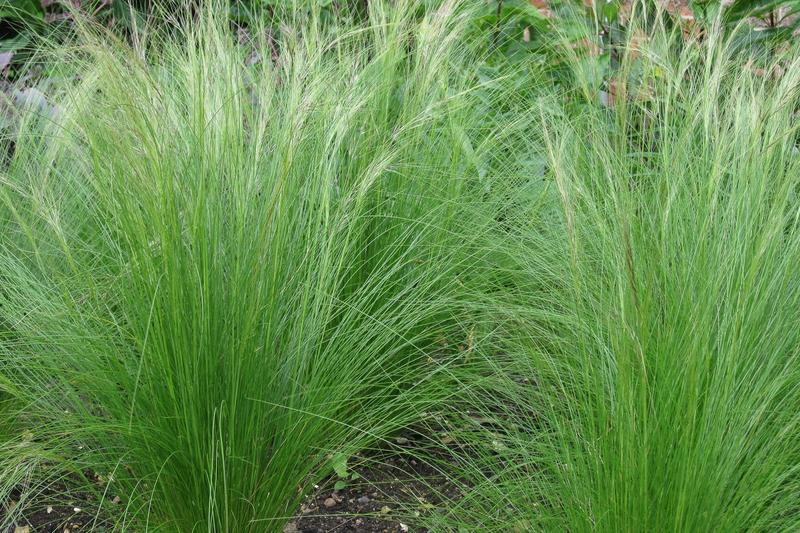
Quick facts
- Watering
- Fortnightly once established
- Sunlight
- Full sun
- Soil
- Well-drained, poor to moderately fertile
- Humans
- Safe
- Cats
- Safe
- Dogs
- Safe
- Height
- 45–60 cm
- Spread
- 30–45 cm
- Spacing
- 40–50 cm apart
- RHS recognition
- Award of Garden Merit
About Mexican Feather Grass
Mexican Feather Grass is a graceful ornamental grass native to Texas, New Mexico and Mexico, forming elegant clumps of fine, hair-like green foliage that flows and dances in the slightest breeze. Its delicate appearance belies a tough constitution, making it a favourite among UK gardeners for adding movement and texture to borders, gravel gardens and contemporary planting schemes. From late spring through summer, it produces airy, blonde flower plumes that catch the light beautifully and persist into autumn. This short-lived perennial readily self-seeds, creating naturalistic drifts that soften hard landscaping and complement both traditional cottage gardens and modern minimalist designs.
UK fact: Mexican Feather Grass holds an RHS Award of Garden Merit and has become so successful in UK gardens that it can self-seed prolifically in mild regions, particularly in southern England where it occasionally naturalises in gravel drives and paving cracks.
Watering Mexican Feather Grass
Once established, Mexican Feather Grass is remarkably drought-tolerant and requires watering only during prolonged dry spells in summer, typically every two weeks if rainfall is scarce. Water newly planted specimens weekly during their first growing season to help establish a strong root system. In typical UK conditions with regular rainfall, mature plants rarely need supplementary watering except during exceptional droughts. Avoid overwatering, as this grass prefers drier conditions and can suffer from root rot in waterlogged soil.
Sunlight requirements
Mexican Feather Grass thrives in full sun and requires at least six hours of direct sunlight daily to maintain its compact form and produce abundant flower plumes. In the UK, position it in south or west-facing borders where it will receive maximum light throughout the growing season. Whilst it tolerates light shade, plants grown in shadier positions tend to become lax and floppy, losing their characteristic upright fountain shape.
Soil and feeding
Mexican Feather Grass performs best in free-draining soil and actually thrives in relatively poor to moderately fertile conditions, making it ideal for gravel gardens, Mediterranean-style borders and challenging dry spots. It tolerates a wide pH range from slightly acidic to alkaline (pH 6.0-8.0) and excels in sandy or gravelly soils where many other plants struggle. Heavy clay soils must be improved with grit or sharp sand to ensure adequate drainage, as waterlogged conditions will quickly kill this grass. Avoid rich, moisture-retentive soils which encourage lush growth that is prone to flopping and reduces the plant's natural drought tolerance.
Mexican Feather Grass requires minimal feeding and actually performs better in lean conditions. A light application of general-purpose fertiliser in early spring is sufficient, or simply omit feeding altogether in average garden soils. Overfertilising produces weak, floppy growth that lacks the plant's characteristic grace and may reduce its hardiness.
Pruning Mexican Feather Grass
Cut back the entire plant to within 5-10cm of ground level in late February or early March, just before new growth emerges. This annual hard prune removes the previous year's tired foliage and flower stems, encouraging fresh, vigorous growth and maintaining a neat appearance. You can also comb through the clump with gloved fingers in late winter to remove dead material if you prefer a lighter touch, though a complete shearing is more effective and quicker for multiple plants.
Propagating Mexican Feather Grass
Mexican Feather Grass is easily propagated by division in spring (March to April) or by seed. Lift established clumps and tease apart into smaller sections, ensuring each division has healthy roots and shoots, then replant immediately at the same depth. Seed propagation is straightforward: collect ripe seed in late summer, sow in autumn or spring in well-drained compost, and germination typically occurs within two to three weeks at 15-20°C. Be aware that this grass self-seeds freely in favourable conditions, and you may find numerous seedlings appearing around the parent plant which can be transplanted or removed as desired.
Common problems
Mexican Feather Grass is generally trouble-free with few serious pest or disease problems in UK gardens. The main issue is its tendency to self-seed prolifically, which some gardeners consider invasive, particularly in gravel gardens and paving where seedlings establish readily. Deadheading before seeds ripen in late summer helps control unwanted spread. In very wet winters or poorly drained soils, plants may succumb to root rot or crown rot, so ensuring excellent drainage is essential. Occasionally, aphids may colonise young growth in spring, though these rarely cause significant damage and can be controlled with a strong water spray or insecticidal soap if necessary.
Spot a problem with your plant? Photograph the affected area using the Loam app and it will suggest the most likely cause and treatment.
Safety
- Humans
- Safe
- Cats
- Safe
- Dogs
- Safe
Toxicity information is for general guidance only.
Seasonal care calendar
Monthly care guide for Mexican Feather Grass in the UK, based on average conditions.
| Month | Care tasks |
|---|---|
| January | No action needed; leave old foliage in place for winter structure and frost protection. |
| February | Cut back all growth to 5-10cm from ground level in late February before new shoots emerge. |
| March | Fresh green growth emerges; apply light general fertiliser if desired and divide established clumps. |
| April | Water newly planted specimens weekly; weed around plants to reduce competition. |
| May | Foliage reaches full height; flower plumes begin to emerge in late May. |
| June | Enjoy the flowing movement of foliage and developing flower plumes; water during dry spells. |
| July | Flower plumes mature to blonde; deadhead to prevent self-seeding if desired. |
| August | Continue deadheading to control spread; collect seed for propagation if wanted. |
| September | Foliage and seed heads take on attractive autumn tones; reduce watering. |
| October | Leave seed heads and foliage in place for winter interest and wildlife value. |
| November | No action needed; bleached foliage provides structure through winter. |
| December | No action needed; old growth protects crown from severe frost. |
Frequently asked questions
- Is Mexican Feather Grass invasive in the UK?
- Mexican Feather Grass can self-seed prolifically in UK gardens, particularly in mild southern regions and well-drained soils. Whilst not officially classified as invasive, it spreads readily in gravel gardens and paving cracks. Deadhead flower plumes before seeds ripen in late summer to control unwanted spread, or embrace its naturalistic self-seeding habit for informal drifts.
- Why is my Mexican Feather Grass flopping over?
- Flopping is usually caused by too much shade, overly rich soil, or excessive watering and feeding. Mexican Feather Grass needs full sun and lean, well-drained conditions to maintain its upright fountain shape. The Loam app can help you track your plant's light exposure and watering schedule to identify the cause and adjust care accordingly.
- When should I cut back Mexican Feather Grass?
- Cut back Mexican Feather Grass in late February or early March, just before new growth begins. Shear the entire plant down to 5-10cm from ground level to remove old foliage and encourage fresh, vigorous growth. Avoid autumn pruning, as the old foliage protects the crown from winter frost and provides attractive structure through the colder months.
Got a question about growing Mexican Feather Grass that isn't covered here? Ask the Garden Advisor in the Loam app. It knows your saved plants and local conditions.
Related plants
This page was compiled with AI assistance and reviewed by our team. .