Pachysandra
Pachysandra terminalis
Shrubs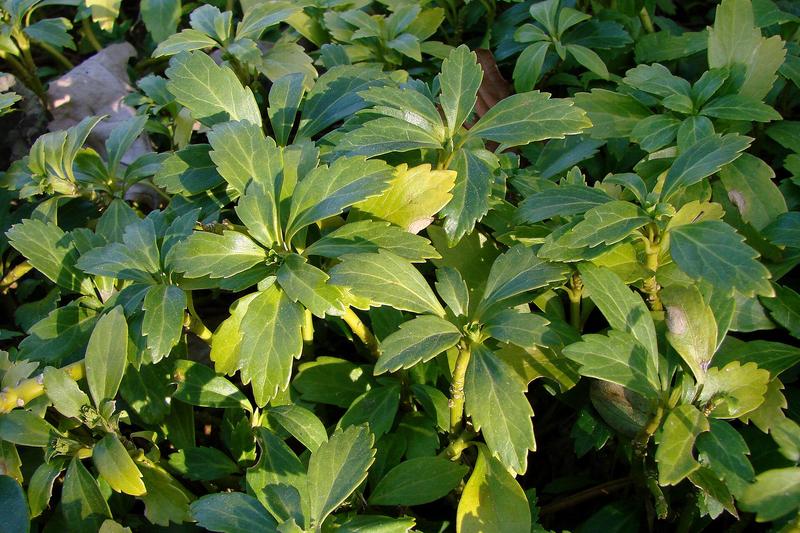
Quick facts
- Watering
- Weekly during establishment
- Sunlight
- Partial to full shade
- Soil
- Moist, well-drained, acidic to neutral
- Humans
- Toxic
- Cats
- Toxic
- Dogs
- Toxic
- Height
- 20–30 cm
- Spread
- 60–100 cm
- Spacing
- 30–45 cm apart
- RHS recognition
- Award of Garden Merit
About Pachysandra
Pachysandra is a low-growing evergreen ground cover native to Japan and China, prized for its glossy, dark green foliage and ability to thrive in deep shade. This mat-forming perennial typically reaches 20–30 cm tall and spreads steadily to form dense carpets that suppress weeds effectively. UK gardeners value it particularly for covering difficult shaded areas under trees and shrubs where little else will grow. In spring, it produces small white flower spikes, though it is grown primarily for its attractive foliage.
UK fact: Pachysandra terminalis holds the RHS Award of Garden Merit and has been a staple of British woodland gardens since the early 20th century, particularly valued in Victorian-style shrubberies and as underplanting in rhododendron collections.
Watering Pachysandra
Water newly planted pachysandra regularly during the first growing season to establish a strong root system, typically once or twice weekly in dry spells. Once established, it is remarkably drought-tolerant in shaded positions and rarely requires supplementary watering in the UK climate. During prolonged summer droughts, water deeply every fortnight to maintain foliage quality. Avoid waterlogging, which can lead to root rot.
Sunlight requirements
Pachysandra thrives in partial to full shade and is ideal for north-facing borders or beneath tree canopies. In the UK, it tolerates some morning sun but may suffer leaf scorch in hot, exposed positions, particularly in southern regions. Plant it in the shadiest parts of your garden where other ground covers struggle.
Soil and feeding
Pachysandra prefers moist, humus-rich soil with good drainage and performs best in acidic to neutral conditions (pH 5.5–7.0). Improve heavy clay soils with organic matter such as leaf mould or well-rotted compost before planting. It tolerates a range of soil types but struggles in very alkaline or waterlogged conditions. Mulch annually with composted bark or leaf mould to retain moisture and suppress weeds.
Apply a balanced slow-release fertiliser in early spring or top-dress with well-rotted compost to encourage healthy growth. Avoid high-nitrogen feeds, which can promote soft growth at the expense of the plant's natural compact habit. Established plants in fertile soil rarely require additional feeding.
Pruning Pachysandra
Pachysandra requires minimal pruning but benefits from tidying in early spring before new growth emerges. Remove any winter-damaged or discoloured leaves to maintain a neat appearance. If plants become straggly or bare in the centre, shear them back by half in March to encourage fresh, dense growth. Trim edges annually to prevent encroachment into adjacent planting areas.
Propagating Pachysandra
Pachysandra is easily propagated by division in spring or autumn, lifting clumps and separating rooted sections for replanting. Stem cuttings taken in late spring or early summer root readily in a mix of peat-free compost and sharp sand, kept moist in a shaded cold frame. Division is the quickest method for UK gardeners, providing instant ground cover. Space new divisions 30–45 cm apart to allow for spreading.
Common problems
Pachysandra is generally trouble-free but can suffer from Volutella blight, a fungal disease causing stem dieback and brown leaf spots, particularly in overcrowded or poorly ventilated plantings. Improve air circulation and remove affected growth promptly. Slugs and snails may damage young shoots in spring. Yellowing foliage often indicates alkaline soil or waterlogging rather than nutrient deficiency. In very dry conditions, spider mites can occasionally become problematic.
Spot a problem with your plant? Photograph the affected area using the Loam app and it will suggest the most likely cause and treatment.
Safety
- Humans
-
Toxic
All parts of pachysandra contain saponins and are mildly toxic if ingested, potentially causing nausea and digestive upset.
- Cats
-
Toxic
Toxic to cats if ingested, causing vomiting, drooling, and gastrointestinal irritation due to saponin content.
- Dogs
-
Toxic
Toxic to dogs if ingested, causing vomiting, diarrhoea, and excessive drooling due to saponin compounds.
Toxicity information is for general guidance only. If a person or pet has been exposed to this plant and you are concerned, seek advice from a medical professional or vet.
Seasonal care calendar
Monthly care guide for Pachysandra in the UK, based on average conditions.
| Month | Care tasks |
|---|---|
| January | No action needed; plants are dormant but evergreen foliage provides winter interest. |
| February | Check for winter damage and remove any discoloured or damaged leaves. |
| March | Tidy plants by removing dead foliage; apply slow-release fertiliser or compost mulch. Divide established clumps if needed. |
| April | White flower spikes emerge; plant new divisions or container-grown plants. Water during dry spells. |
| May | Flowering continues; take stem cuttings for propagation. Keep newly planted areas well watered. |
| June | Monitor for pests and diseases; water during dry periods to maintain foliage quality. |
| July | Water established plants during prolonged drought; trim edges to control spread. |
| August | Continue watering if dry; monitor for spider mites in very hot weather. |
| September | Divide overcrowded clumps if needed; plant new divisions while soil is still warm. |
| October | Apply autumn mulch of leaf mould or composted bark to enrich soil and suppress weeds. |
| November | Clear fallen leaves from foliage to prevent fungal issues and maintain appearance. |
| December | No action needed; evergreen foliage provides valuable winter ground cover. |
Frequently asked questions
- Why is my pachysandra turning yellow?
- Yellowing pachysandra typically indicates alkaline soil (above pH 7.0), waterlogged conditions, or occasionally iron deficiency. Test your soil pH and improve drainage by incorporating organic matter. If soil is alkaline, apply sulphur chips or ericaceous compost to lower pH. Ensure the planting area isn't waterlogged, as pachysandra requires moist but well-drained conditions.
- How do I know when to water my pachysandra?
- Pachysandra needs regular watering during establishment but is drought-tolerant once mature. The Loam app can send you personalised watering reminders based on your local weather conditions and soil type, taking the guesswork out of care. Generally, water weekly during dry spells in the first year, then only during prolonged droughts.
- Can pachysandra grow under conifers?
- Yes, pachysandra is one of the few ground covers that thrives under conifers, tolerating both deep shade and acidic soil conditions created by pine needles. It's an excellent choice for underplanting yew, pine, and spruce trees where grass struggles. Ensure adequate moisture during establishment, as conifer roots can be competitive.
Got a question about growing Pachysandra that isn't covered here? Ask the Garden Advisor in the Loam app. It knows your saved plants and local conditions.
Related plants
This page was compiled with AI assistance and reviewed by our team. .