Myrtle
Myrtus communis
Shrubs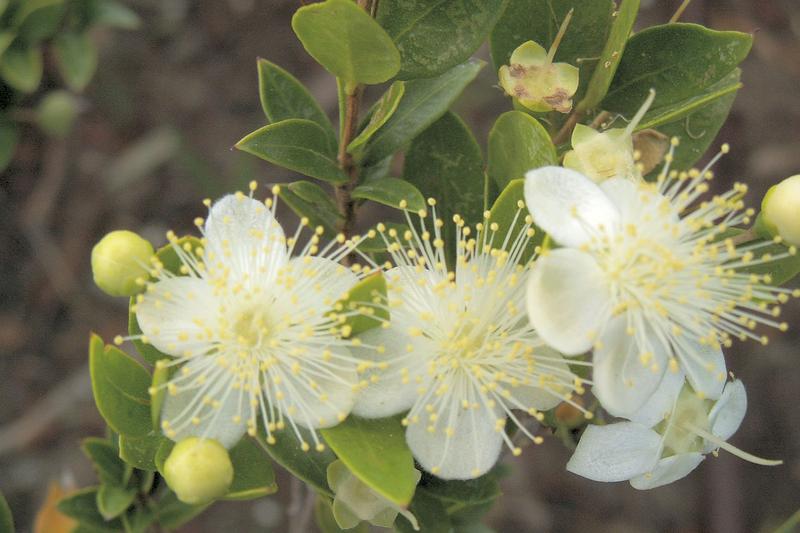
Quick facts
- Watering
- Weekly during growing season
- Sunlight
- Full sun to partial shade
- Soil
- Well-drained, moderately fertile loam
- Humans
- Safe
- Cats
- Toxic
- Dogs
- Toxic
- Height
- 90–300 cm
- Spread
- 90–250 cm
- Spacing
- 100–150 cm apart
- RHS recognition
- Award of Garden Merit
About Myrtle
Myrtle is an evergreen Mediterranean shrub prized for its aromatic, glossy dark green leaves, fragrant white flowers in summer, and purple-black berries in autumn. Native to southern Europe and North Africa, it has been cultivated in Britain since the 16th century, traditionally grown in sheltered gardens and conservatories. UK gardeners value it for its year-round foliage, sweet-scented blooms, and historical associations with love and marriage. In milder regions it thrives outdoors, whilst in colder areas it makes an excellent container specimen that can be moved under cover in winter.
UK fact: Myrtle has been grown in British gardens since Tudor times and was traditionally included in royal wedding bouquets, including those of Queen Victoria, Queen Elizabeth II, and subsequent royal brides, with sprigs taken from bushes grown from the original Victoria plant at Osborne House.
Watering Myrtle
Water regularly during the growing season, ensuring the soil remains moist but never waterlogged, as myrtle dislikes both drought and sitting in wet conditions. Established plants in the ground are moderately drought-tolerant once their roots are deep, but container specimens need consistent watering throughout summer. Reduce watering significantly in winter, allowing the top few centimetres of soil to dry between waterings. In hot, dry spells, mist the foliage occasionally to increase humidity and prevent leaf drop.
Sunlight requirements
Myrtle performs best in full sun, which encourages abundant flowering and compact growth, though it tolerates partial shade in warmer regions. In the UK, position against a south or west-facing wall to provide shelter from cold winds and maximise warmth. Container-grown plants benefit from the sunniest spot available, particularly in northern areas where light levels are lower.
Soil and feeding
Myrtle thrives in well-drained, moderately fertile soil with a neutral to slightly alkaline pH of 6.5–7.5, though it tolerates slightly acidic conditions. Heavy clay soils should be improved with grit and organic matter to ensure good drainage, as waterlogged roots can lead to root rot. For container cultivation, use a loam-based compost such as John Innes No. 2 with added horticultural grit for drainage. Avoid overly rich soils, which can produce lush growth at the expense of flowers and hardiness.
Feed container-grown myrtle fortnightly during the growing season with a balanced liquid fertiliser to support flowering and foliage. Plants in the ground benefit from a light application of general-purpose fertiliser in spring, though established specimens in reasonable soil rarely need additional feeding. Avoid high-nitrogen feeds, which promote soft growth vulnerable to frost damage.
Pruning Myrtle
Prune myrtle lightly in late spring after the risk of hard frost has passed, removing any frost-damaged shoots and shaping the plant as desired. It responds well to clipping and can be trained as a standard or topiary specimen, though heavy pruning should be avoided as it flowers on the previous year's growth. Deadhead spent flowers to encourage a second flush and maintain a tidy appearance. Container plants may need more frequent trimming to maintain size and shape, which is best done little and often rather than severe cuts.
Propagating Myrtle
Myrtle propagates readily from semi-ripe cuttings taken in late summer, using 7–10 cm lengths of non-flowering side shoots with a heel. Dip the cut end in hormone rooting powder and insert into pots of gritty, free-draining compost, then place in a propagator or cover with a plastic bag to maintain humidity. Cuttings typically root within 6–8 weeks and should be overwintered in a frost-free greenhouse before potting on in spring. Layering is also successful, pegging down low branches in spring and severing once rooted the following year.
Common problems
Myrtle is generally trouble-free but can suffer from scale insects and glasshouse whitefly, particularly on plants grown under cover or in sheltered positions. Check regularly and treat infestations with horticultural soap or biological controls. In poorly drained soil or overly wet conditions, root rot and fungal diseases may occur, causing yellowing leaves and dieback. Cold damage is the most common issue in the UK, with frost causing browning of foliage and die-back of shoots, though plants often recover from the base if the roots are protected with mulch.
Spot a problem with your plant? Photograph the affected area using the Loam app and it will suggest the most likely cause and treatment.
Safety
- Humans
- Safe
- Cats
-
Toxic
Myrtle contains compounds that can cause vomiting and diarrhoea if ingested by cats in significant quantities.
- Dogs
-
Toxic
Ingestion of myrtle leaves or berries may cause gastrointestinal upset in dogs, including vomiting and diarrhoea.
Toxicity information is for general guidance only. If a pet has been exposed to this plant and you are concerned, seek advice from a vet.
Seasonal care calendar
Monthly care guide for Myrtle in the UK, based on average conditions.
| Month | Care tasks |
|---|---|
| January | Protect outdoor plants from severe frost with fleece or move containers to a sheltered spot. |
| February | Check for frost damage but avoid pruning until spring when new growth reveals extent of damage. |
| March | Begin watering container plants more regularly as temperatures rise and growth resumes. |
| April | Apply balanced fertiliser to container plants and prune out any frost-damaged growth. |
| May | Shape plants and trim lightly if needed; move containers outdoors once all frost risk has passed. |
| June | Enjoy the fragrant white flowers; water regularly and feed container plants fortnightly. |
| July | Continue regular watering and feeding; deadhead spent flowers to encourage further blooms. |
| August | Take semi-ripe cuttings for propagation; maintain watering during dry spells. |
| September | Reduce feeding as growth slows; berries begin to develop and ripen to purple-black. |
| October | Reduce watering frequency; move container plants to sheltered positions in colder regions. |
| November | Protect outdoor plants with fleece in cold areas or move containers under cover before frosts. |
| December | Keep container plants barely moist; ensure adequate ventilation if overwintering under glass. |
Frequently asked questions
- Is myrtle hardy enough to grow outdoors in the UK?
- Myrtle is hardy in most of the UK (RHS H4), surviving temperatures down to around -10°C, though it performs best in milder southern and coastal regions. In colder areas, grow it in a container that can be moved to a frost-free greenhouse or porch over winter, or plant against a warm south-facing wall with winter fleece protection. Established plants often recover from frost damage even if top growth is affected.
- Why are the leaves on my myrtle turning brown and dropping?
- Browning and leaf drop usually indicate frost damage, overwatering, or sudden environmental changes such as moving from outdoors to indoors. Check soil moisture levels and drainage, and assess whether the plant has been exposed to cold. The Loam app can help you track watering schedules and send alerts when conditions change, ensuring your myrtle receives consistent care tailored to your local climate.
- When should I prune myrtle to maintain its shape?
- Prune myrtle lightly in late spring (April to May) after the last frosts, when you can clearly see any frost damage and new growth is beginning. Avoid heavy pruning as myrtle flowers on the previous year's wood, so excessive cutting will reduce blooms. For topiary or formal shapes, trim little and often during the growing season rather than making severe cuts all at once.
Got a question about growing Myrtle that isn't covered here? Ask the Garden Advisor in the Loam app. It knows your saved plants and local conditions.
Related plants
This page was compiled with AI assistance and reviewed by our team. .