Holy Basil
Ocimum tenuiflorum
Herbs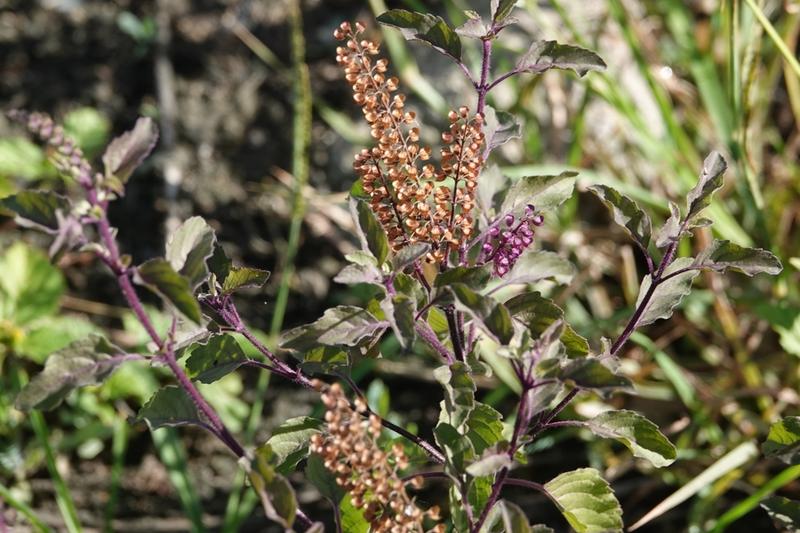
Quick facts
- Watering
- Every 2-3 days in summer
- Sunlight
- Full sun
- Soil
- Well-drained, fertile, slightly acidic
- Humans
- Safe
- Cats
- Safe
- Dogs
- Safe
- Height
- 30–60 cm
- Spread
- 20–40 cm
- Spacing
- 25–30 cm apart
About Holy Basil
Holy basil, also known as tulsi, is a tender aromatic herb native to the Indian subcontinent with purple-tinged stems and fragrant, slightly serrated leaves. In the UK, it is grown primarily as a summer annual or conservatory plant, valued for its medicinal properties and distinctive clove-like flavour. The plant produces attractive purple or white flower spikes in late summer, making it both ornamental and functional. British gardeners appreciate holy basil for its cultural significance in Ayurvedic medicine and as a unique addition to herb gardens.
UK fact: Holy basil thrives in British polytunnels and conservatories where it can benefit from the extended warmth, often outperforming outdoor specimens in cooler regions and producing a more intense aromatic oil content than plants grown in full exposure.
Watering Holy Basil
Water regularly to keep the soil consistently moist but never waterlogged, as holy basil is susceptible to root rot in heavy, saturated conditions. During the British summer, container-grown plants may require watering every two to three days, whilst those in borders need less frequent attention. Reduce watering significantly if growing plants indoors over winter, allowing the top centimetre of compost to dry between waterings. Morning watering is preferable to reduce the risk of fungal diseases in the UK's humid climate.
Sunlight requirements
Holy basil requires full sun to develop its characteristic aromatic oils and compact growth habit. In the UK, position plants in the sunniest spot available, ideally a south-facing location with at least six hours of direct sunlight daily. Plants grown in partial shade become leggy and produce fewer essential oils, reducing both flavour and medicinal potency.
Soil and feeding
Holy basil thrives in well-drained, fertile soil with a slightly acidic to neutral pH of 6.0 to 7.0. Incorporate plenty of organic matter such as garden compost or well-rotted manure to improve both drainage and nutrient content. For container cultivation, use a quality peat-free multipurpose compost mixed with perlite or horticultural grit to ensure adequate drainage. Heavy clay soils should be amended with sharp sand and organic matter, or consider growing in raised beds to prevent waterlogging.
Feed holy basil fortnightly during the growing season with a balanced liquid fertiliser diluted to half strength, or apply a slow-release organic fertiliser at planting time. Avoid high-nitrogen feeds which promote excessive leafy growth at the expense of essential oil production and flavour intensity. Container-grown plants benefit from more frequent feeding than those in the ground.
Pruning Holy Basil
Pinch out growing tips regularly from late spring onwards to encourage bushy, compact growth and prevent premature flowering. Remove flower spikes as they appear to prolong the harvest period and maintain leaf quality, though you may wish to allow some flowers to develop for ornamental interest or seed collection. In late summer, cut back plants by one-third to stimulate fresh growth before cooler autumn weather arrives. Holy basil grown as a perennial indoors should be pruned back hard in late winter to rejuvenate growth.
Propagating Holy Basil
Holy basil is easily propagated from seed sown indoors from March to April at 18-21°C, with germination occurring within 7-14 days. Alternatively, take softwood cuttings in early summer, removing 8-10cm non-flowering shoots and rooting them in moist compost or water. Seed-raised plants are generally more vigorous, whilst cuttings allow you to preserve the exact characteristics of a particularly good specimen. In the UK climate, all propagation should occur under protection, as holy basil will not tolerate cold temperatures at any stage of development.
Common problems
Aphids and whitefly are the most common pests affecting holy basil in the UK, particularly on plants grown under glass where populations can build rapidly. Downy mildew and fusarium wilt may occur in poorly ventilated conditions or when plants are overwatered, causing yellowing leaves and stunted growth. Slugs can devastate young plants in early summer, so protection with organic slug pellets or copper tape is advisable. Cold damage manifests as blackened, wilted foliage and occurs readily if plants are exposed to temperatures below 10°C, making frost protection absolutely essential for British growers.
Spot a problem with your plant? Photograph the affected area using the Loam app and it will suggest the most likely cause and treatment.
Safety
- Humans
- Safe
- Cats
- Safe
- Dogs
- Safe
Toxicity information is for general guidance only.
Seasonal care calendar
Monthly care guide for Holy Basil in the UK, based on average conditions.
| Month | Care tasks |
|---|---|
| January | Maintain indoor plants in a heated greenhouse or bright windowsill at minimum 10°C. Water sparingly. |
| February | Prune back overwintered plants to encourage fresh growth. Begin planning seed orders for spring sowing. |
| March | Sow seeds indoors in modules at 18-21°C. Increase watering of overwintered plants as growth resumes. |
| April | Prick out seedlings into individual pots. Continue indoor cultivation; do not plant outside until all frost risk has passed. |
| May | Harden off plants gradually from mid-month. Plant out after the last frost in warmest regions only. Begin pinching out growing tips. |
| June | Plant out in all regions once soil has warmed. Water regularly and feed fortnightly. Pinch out tips to encourage bushy growth. |
| July | Harvest leaves regularly to promote fresh growth. Remove flower spikes. Water daily in hot weather. Take softwood cuttings. |
| August | Continue harvesting and deadheading. Feed weekly. Watch for aphids and whitefly, particularly on protected plants. |
| September | Reduce watering frequency. Pot up outdoor plants to bring indoors before first frost. Allow some flowers for seed collection. |
| October | Move all plants under protection before frost. Reduce feeding. Harvest remaining outdoor foliage before cold weather. |
| November | Maintain indoor plants in bright, warm conditions. Water sparingly. Most outdoor plants will have succumbed to frost. |
| December | Keep indoor plants at minimum 10°C with good light. Water only when compost surface feels dry. |
Frequently asked questions
- Can you grow holy basil outdoors in the UK?
- Holy basil can be grown outdoors in the UK only during summer months after all frost risk has passed, typically from late May to September. It requires a warm, sheltered spot in full sun and must be brought indoors or treated as an annual before the first autumn frost, as it cannot tolerate temperatures below 10°C. For best results, grow in containers that can be moved under protection, or cultivate in a polytunnel or greenhouse year-round.
- Why are my holy basil leaves turning yellow?
- Yellowing leaves on holy basil typically indicate overwatering, nutrient deficiency, or fungal disease such as fusarium wilt. The Loam app can help you diagnose the specific cause by analysing your watering schedule, recent weather conditions, and photos of affected foliage, then provide tailored advice to restore your plant's health.
- What's the difference between holy basil and sweet basil?
- Holy basil (Ocimum tenuiflorum) has a more pungent, clove-like flavour with peppery notes and purple-tinged stems, whilst sweet basil (Ocimum basilicum) offers a milder, sweeter anise flavour with bright green foliage. Holy basil is primarily used for medicinal purposes in Ayurvedic traditions and herbal teas, whereas sweet basil is the culinary standard for Italian and Mediterranean cooking. Holy basil is also slightly more cold-sensitive and requires warmer conditions to thrive in the UK.
Got a question about growing Holy Basil that isn't covered here? Ask the Garden Advisor in the Loam app. It knows your saved plants and local conditions.
Related plants
This page was compiled with AI assistance and reviewed by our team. .