Fuchsia
Fuchsia
Shrubs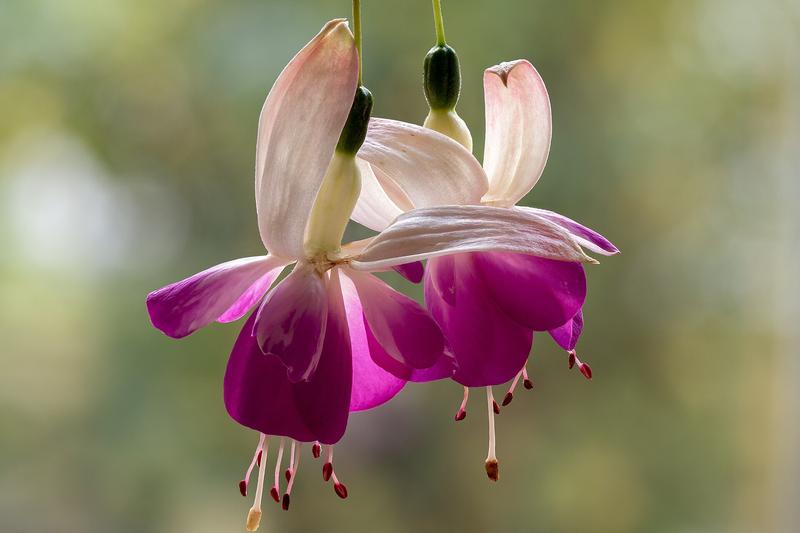
Quick facts
- Watering
- Two to three times weekly
- Sunlight
- Partial shade
- Soil
- Moist, well-drained, fertile
- Humans
- Safe
- Cats
- Safe
- Dogs
- Safe
- Height
- 30–200 cm
- Spread
- 30–150 cm
- Spacing
- 45–90 cm apart
- RHS recognition
- Award of Garden Merit
About Fuchsia
Fuchsias are beloved shrubs renowned for their elegant, pendulous flowers in shades of pink, purple, red, and white that bloom prolifically from late spring through autumn. Native to Central and South America, these versatile plants have been cherished in British gardens since Victorian times. UK gardeners prize fuchsias for their long flowering season, shade tolerance, and suitability for containers, hanging baskets, and borders. With varieties ranging from tender greenhouse specimens to fully hardy garden shrubs, fuchsias offer something for every British garden.
UK fact: Many fuchsia cultivars hold the RHS Award of Garden Merit, and the National Collection of Hardy Fuchsias is held at Glenarn in Scotland, demonstrating that carefully selected varieties can thrive even in cooler British climates when given appropriate winter protection.
Watering Fuchsia
Fuchsias require regular watering throughout summer, particularly container-grown specimens which may need daily attention during hot spells. Water thoroughly until it drains from the base, ensuring the rootball is evenly moist but never waterlogged. In the ground, established plants need deep watering two to three times weekly during dry periods. Reduce watering significantly in autumn and keep barely moist over winter, as overwatering dormant plants causes root rot.
Sunlight requirements
In the UK, fuchsias perform best in partial shade, particularly sheltered from hot afternoon sun which can scorch leaves and fade flowers. North or east-facing positions are ideal, though hardy varieties tolerate more sun in northern regions. Avoid deep shade which reduces flowering, and provide shelter from strong winds that damage delicate blooms.
Soil and feeding
Plant fuchsias in fertile, humus-rich soil that retains moisture without becoming waterlogged. Incorporate plenty of well-rotted compost or leaf mould before planting to improve both drainage and water retention. They prefer a slightly acidic to neutral pH of 6.0-7.0. For containers, use a quality peat-free multipurpose compost mixed with John Innes No. 2 for stability and nutrients.
Begin feeding fuchsias in late April or early May when active growth resumes, using a balanced liquid fertiliser initially. Switch to a high-potassium tomato feed once flowering begins, applying weekly to maintain the prolific blooming that makes fuchsias so valuable. Cease feeding by late August to allow plants to harden off before winter.
Pruning Fuchsia
For hardy varieties, cut back to healthy wood in March or April, removing frost-damaged growth to ground level or a low framework. Tender fuchsias overwintered indoors should be pruned in early spring, cutting back by one-third to half. Throughout the growing season, pinch out shoot tips every few weeks on young plants to promote branching and a fuller shape. Deadhead regularly to prolong flowering, though this is less critical than with some plants as fuchsias bloom on new growth.
Propagating Fuchsia
Take 7-10cm softwood cuttings from non-flowering shoots in April-May or August-September, when plants are in active growth. Spring cuttings root quickly and develop into flowering plants the same season, whilst late summer cuttings provide insurance plants to overwinter. Cuttings root readily in just 2-3 weeks in a propagator or on a bright windowsill. This ease of propagation means gardeners can quickly build up stock or replace tender varieties lost to harsh winters.
Common problems
Fuchsias are susceptible to fuchsia gall mite, a devastating pest that causes distorted, swollen growth and has spread across the UK in recent years; affected plants must be destroyed. Aphids, whitefly, and vine weevil larvae also trouble fuchsias, particularly container-grown specimens. Grey mould (botrytis) can affect plants in damp conditions, especially during overwintering. Rust occasionally appears as orange pustules on leaf undersides in humid summers, whilst capsid bugs cause distorted leaves and damaged flower buds.
Spot a problem with your plant? Photograph the affected area using the Loam app and it will suggest the most likely cause and treatment.
Safety
- Humans
- Safe
- Cats
- Safe
- Dogs
- Safe
Toxicity information is for general guidance only.
Seasonal care calendar
Monthly care guide for Fuchsia in the UK, based on average conditions.
| Month | Care tasks |
|---|---|
| January | Check overwintered plants in frost-free storage; keep barely moist and ventilate on mild days to prevent fungal issues. |
| February | Continue minimal watering of dormant plants. Inspect for vine weevil and remove any damaged growth or fallen leaves. |
| March | Prune hardy varieties once frost risk diminishes, cutting back to healthy growth. Increase watering as new shoots emerge and begin feeding. |
| April | Take softwood cuttings from new growth. Pot on overwintered plants and pinch growing tips to encourage bushiness. Harden off gradually before planting out. |
| May | Plant out after last frosts, typically mid to late May. Continue pinching young plants and begin weekly feeding with balanced fertiliser. |
| June | Switch to high-potassium feed as flowering begins. Water regularly, especially containers. Deadhead spent blooms and watch for aphids and whitefly. |
| July | Maintain regular watering and weekly feeding. Deadhead frequently to prolong display. Check for fuchsia gall mite and remove affected growth immediately. |
| August | Continue watering and feeding until late in the month. Take late summer cuttings for overwintering. Enjoy peak flowering period. |
| September | Reduce feeding frequency. Continue watering as needed. Pot up rooted cuttings and prepare tender varieties for moving under cover before first frosts. |
| October | Bring tender fuchsias into frost-free storage before first frosts. Mulch hardy varieties with bark or compost for winter protection. |
| November | Reduce watering of stored plants to minimal levels. Ensure good ventilation in storage to prevent botrytis. Check hardy varieties' mulch is in place. |
| December | Keep overwintered plants barely moist in frost-free conditions. Remove any dead or diseased material promptly to maintain plant health. |
Frequently asked questions
- When should I prune my fuchsia in the UK?
- Prune fuchsias in two stages: light pruning in autumn when you bring tender varieties indoors, removing soft growth and spent flowers, then harder pruning in spring (March-April) when new growth appears. Cut back to healthy buds, removing weak or dead wood. Hardy outdoor fuchsias can be pruned in spring once frost risk passes. Regular deadheading throughout summer encourages continuous flowering.
- How do I diagnose what's wrong with my fuchsia?
- Fuchsia problems can have multiple causes with similar symptoms—yellowing leaves might indicate watering issues, nutrient deficiency, or root problems, while poor flowering could be light, feeding, or timing related. The Loam app can help you diagnose issues by analysing photos of your plant and asking targeted questions about care conditions, then provides personalised advice and reminders to prevent future problems.
- How do I take cuttings from fuchsias?
- Take softwood cuttings in spring or late summer. Select healthy, non-flowering shoots 7-10cm long, remove lower leaves, and trim just below a leaf joint. Insert into moist, gritty compost and cover with a plastic bag or propagator lid. Keep warm (15-18°C) and out of direct sun. Cuttings root in 3-4 weeks. This is the easiest way to propagate fuchsias and preserve tender varieties over winter.
Got a question about growing Fuchsia that isn't covered here? Ask the Garden Advisor in the Loam app. It knows your saved plants and local conditions.
Related plants
This page was compiled with AI assistance and reviewed by our team. .