Curry Plant
Helichrysum italicum
Herbs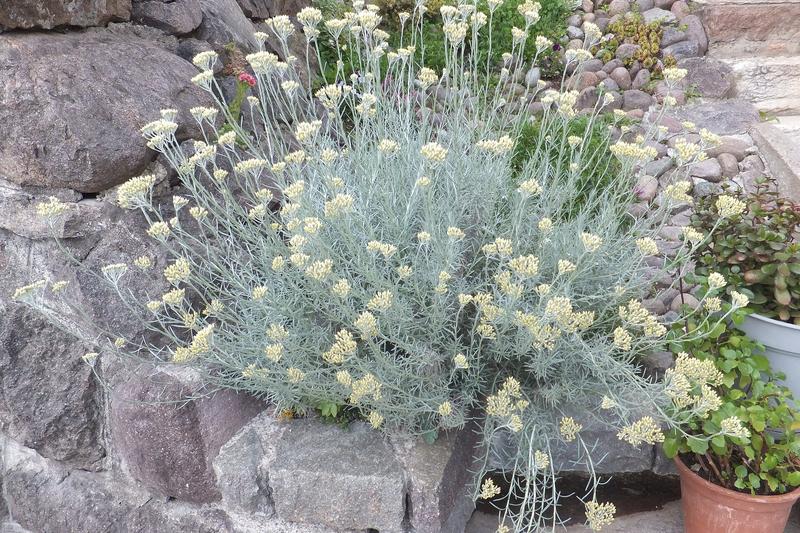
Quick facts
- Watering
- Fortnightly once established
- Sunlight
- Full sun
- Soil
- Well-drained, sandy or gravelly
- Humans
- Safe
- Cats
- Safe
- Dogs
- Safe
- Height
- 40–60 cm
- Spread
- 60–90 cm
- Spacing
- 45–60 cm apart
- RHS recognition
- Award of Garden Merit
About Curry Plant
The Curry Plant is an evergreen Mediterranean subshrub prized for its intensely aromatic, silvery-grey foliage that releases a warm curry scent when brushed or crushed. Native to southern Europe, it produces clusters of bright yellow button-like flowers in summer and thrives in the UK's drier, sunnier gardens. British gardeners value it as much for its drought tolerance and year-round structure as for its culinary associations, though the leaves are rarely used in cooking despite the name. Its compact, mounding habit and striking foliage make it an excellent choice for gravel gardens, Mediterranean-style borders, and sunny herb beds.
UK fact: The Curry Plant has been awarded the RHS Award of Garden Merit, recognising its outstanding performance in British gardens, particularly its ability to withstand coastal conditions and provide year-round silver foliage interest in well-drained sites.
Watering Curry Plant
Water newly planted specimens weekly during their first growing season to establish a deep root system. Once established, Curry Plant is exceptionally drought-tolerant and typically requires watering only during extended dry periods of more than three weeks without rain. Overwatering is the most common cause of failure in British gardens, particularly on heavier soils or during wet winters. In containers, allow the compost to dry out between waterings and reduce watering to monthly or less during winter.
Sunlight requirements
Position in the sunniest spot available, ideally south or west-facing where it will receive at least six hours of direct sunlight daily. In the UK, plants grown in shadier positions become leggy, lose their compact habit, and develop greener, less aromatic foliage. Excellent against sun-baked walls or in gravel gardens where heat is reflected.
Soil and feeding
Curry Plant demands excellent drainage and actually performs best in nutrient-poor, sandy, or gravelly soils with a pH of 6.5–7.5. On heavy clay, incorporate copious amounts of horticultural grit or sharp sand and consider planting on a slope or raised bed to improve drainage. Winter waterlogging is fatal, so avoid rich, moisture-retentive soils entirely. The plant's Mediterranean origins mean it thrives in the lean, fast-draining conditions that challenge many other herbs.
Avoid feeding established plants, as Curry Plant thrives on neglect and poor soils. Excessive nitrogen produces lush, leggy growth that is less aromatic and more vulnerable to winter cold and fungal diseases. If growing in containers, a single application of diluted liquid seaweed feed in late spring is sufficient.
Pruning Curry Plant
Cut back by one-third to one-half in late April or early May, after the last frosts, to encourage bushy new growth and prevent the plant becoming woody and bare at the base. Remove any frost-damaged or dead stems, cutting back to healthy wood. Deadhead spent flowers in late summer if desired, though the dried flowerheads provide winter interest. Avoid autumn pruning, as this stimulates soft growth vulnerable to winter damage.
Propagating Curry Plant
Semi-ripe cuttings taken in July or August offer the most reliable propagation method for UK gardeners. Select non-flowering shoots, as these root more successfully than flowering stems. Cuttings root within four to six weeks and can be overwintered in a cold frame or unheated greenhouse, providing replacements if the parent plant succumbs to a harsh winter. Division is possible but less successful due to the woody root system.
Common problems
Curry Plant is remarkably pest and disease-free in UK gardens, with root rot being the primary concern in poorly drained soils or during wet winters. Aphids occasionally colonise new growth in spring but rarely cause significant damage. In cold, exposed sites or following severe winters, plants may suffer dieback or complete loss, particularly if planted in autumn rather than spring. Leggy, open growth usually indicates insufficient light or overly rich soil rather than a pest or disease issue.
Spot a problem with your plant? Photograph the affected area using the Loam app and it will suggest the most likely cause and treatment.
Safety
- Humans
- Safe
- Cats
- Safe
- Dogs
- Safe
Toxicity information is for general guidance only.
Seasonal care calendar
Monthly care guide for Curry Plant in the UK, based on average conditions.
| Month | Care tasks |
|---|---|
| January | No action needed. Avoid disturbing plants during cold, wet weather. |
| February | Check for winter damage but delay pruning until late spring. Ensure good drainage around plants. |
| March | Begin planning new plantings but wait until late April or May to plant out. Prepare planting sites with grit. |
| April | Prune established plants in late April, cutting back by one-third to one-half. Plant new specimens from late April onwards. |
| May | Ideal month for planting. Water new plants weekly. Established plants require minimal attention. |
| June | Enjoy the aromatic foliage. Water only during prolonged dry spells. Flower buds begin to form. |
| July | Bright yellow flowers appear. Take semi-ripe cuttings mid to late month for propagation. |
| August | Continue taking cuttings if needed. Deadhead spent flowers or leave for winter interest. Water sparingly. |
| September | Reduce watering as autumn rains begin. Pot on rooted cuttings and move to shelter for winter. |
| October | Avoid autumn pruning. Ensure drainage is adequate before winter rains. Protect container plants from excessive wet. |
| November | No action needed. Silver foliage provides winter interest. Keep off wet foliage to prevent fungal issues. |
| December | No action needed. Plants remain evergreen through winter in most UK regions. |
Frequently asked questions
- How do I prune Curry Plant to keep it bushy?
- Prune Curry Plant in late April or early May, cutting back by one-third to one-half of the growth. This annual trim is essential to prevent legginess and maintain a compact, bushy shape. Always prune above healthy buds and avoid cutting into old, woody stems. Leggy growth also indicates insufficient light or overly rich soil, so ensure your plant receives full sun and avoid feeding.
- Why is my Curry Plant turning brown and dying?
- Browning and dieback in Curry Plant usually indicates waterlogged soil, particularly during winter months, though it can also signal drought stress in summer or root problems. Check soil moisture and drainage first. If you're unsure what's causing the problem, the Loam app can help diagnose the issue through photos and provide personalised care advice based on your specific growing conditions.
- Can I grow Curry Plant from cuttings?
- Yes, Curry Plant propagates easily from semi-ripe cuttings taken in July or August. Take 7-10cm cuttings from non-flowering shoots, remove lower leaves, and insert into very gritty compost. Keep in a bright spot out of direct sun and water sparingly. Cuttings root within 4-6 weeks. Taking summer cuttings is excellent insurance against winter losses, especially in cold or wet gardens.
Got a question about growing Curry Plant that isn't covered here? Ask the Garden Advisor in the Loam app. It knows your saved plants and local conditions.
Related plants
This page was compiled with AI assistance and reviewed by our team. .