Red Tussock Grass
Chionochloa rubra
Grasses and Ferns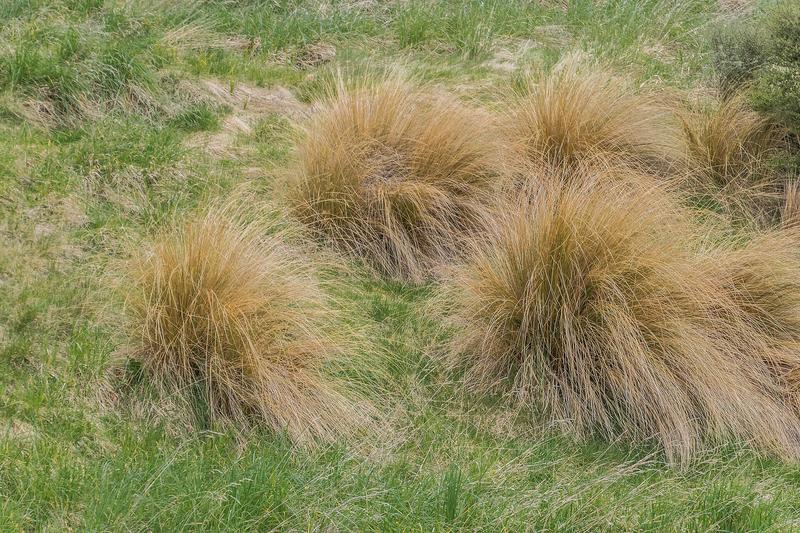
Quick facts
- Watering
- Weekly during establishment
- Sunlight
- Full sun to partial shade
- Soil
- Well-drained, moderately fertile
- Humans
- Safe
- Cats
- Safe
- Dogs
- Safe
- Height
- 60–90 cm
- Spread
- 60–90 cm
- Spacing
- 75–90 cm apart
- RHS recognition
- Award of Garden Merit
About Red Tussock Grass
Red Tussock Grass is a striking evergreen ornamental grass native to New Zealand, forming dense clumps of arching, copper-red foliage that intensifies in colour during autumn and winter. Growing to around 90cm tall, this architectural grass brings year-round interest to UK borders, gravel gardens, and contemporary planting schemes. British gardeners prize it for its low-maintenance nature and ability to provide dramatic colour when most other grasses have faded. The fine-textured leaves create movement in the breeze and contrast beautifully with broad-leaved perennials.
UK fact: Red Tussock Grass has been awarded the RHS Award of Garden Merit, recognising its excellent performance in British gardens and its reliability in our variable climate.
Watering Red Tussock Grass
Water newly planted Red Tussock Grass weekly during the first growing season to establish a deep root system. Once established, typically after 12-18 months, plants are moderately drought-tolerant and require watering only during prolonged dry spells in summer. In the UK's typically moist climate, established plants in open ground rarely need supplementary watering except during exceptional droughts. Container-grown specimens require more frequent watering, particularly in summer.
Sunlight requirements
Red Tussock Grass performs best in full sun where it develops the most intense copper-red colouration, though it tolerates partial shade in warmer regions. In the UK, position in a south or west-facing aspect for optimal colour development. Plants in shadier positions will remain greener with less dramatic autumn tones.
Soil and feeding
Red Tussock Grass thrives in well-drained soil and will not tolerate waterlogged conditions, particularly in winter. It adapts to most soil types including sandy, loamy, and even poor soils, provided drainage is adequate. The ideal pH range is neutral to slightly acidic (6.0-7.0), though plants are tolerant of slightly alkaline conditions. On heavy clay soils, improve drainage by incorporating grit or plant on a slight mound.
Red Tussock Grass requires minimal feeding and actually performs better in moderately fertile rather than rich soils. Apply a light dressing of general-purpose fertiliser in early spring if growth appears weak, but avoid over-feeding which can lead to lax, floppy growth and reduced colour intensity.
Pruning Red Tussock Grass
Prune Red Tussock Grass in late winter or early spring (February to March) before new growth emerges. Use gloves as the leaf edges can be sharp, and comb through the clump with your fingers or a rake to remove dead foliage, or cut back the entire plant to about 10-15cm above ground level for a complete refresh. Avoid autumn pruning as the foliage provides winter interest and protects the crown from frost damage.
Propagating Red Tussock Grass
Red Tussock Grass is most easily propagated by division in spring (March to April) as new growth begins. Lift established clumps with a garden fork and divide into sections using two forks back-to-back or a sharp spade, ensuring each division has healthy roots and several growing points. Replant divisions immediately at the same depth and water well. Seed propagation is possible but less reliable, requiring fresh seed sown in autumn in a cold frame.
Common problems
Red Tussock Grass is generally pest and disease-free in UK gardens, making it an excellent low-maintenance choice. The main cultural problem is crown rot caused by poor drainage or waterlogged winter conditions, so ensure adequate drainage at planting. Occasionally, aphids may appear on new growth in spring but rarely cause significant damage. In very exposed sites, strong winds can cause the foliage to look tatty, so provide some shelter in particularly windy gardens.
Spot a problem with your plant? Photograph the affected area using the Loam app and it will suggest the most likely cause and treatment.
Safety
- Humans
- Safe
- Cats
- Safe
- Dogs
- Safe
Toxicity information is for general guidance only.
Seasonal care calendar
Monthly care guide for Red Tussock Grass in the UK, based on average conditions.
| Month | Care tasks |
|---|---|
| January | Enjoy the winter colour display; avoid disturbing the plant during frosty weather. |
| February | Prune back old foliage in late February before new growth emerges. |
| March | Complete pruning early in the month; divide established clumps if needed; apply light feed if required. |
| April | Plant new specimens; water newly planted or divided grasses weekly. |
| May | Continue watering new plantings; monitor for aphids on fresh growth. |
| June | Water during dry spells; new foliage fills out the clump. |
| July | Water established plants only during prolonged drought; maintain regular watering for containers. |
| August | Continue watering during dry periods; foliage remains green through summer. |
| September | Reduce watering as temperatures cool; foliage begins developing autumn tones. |
| October | Enjoy the intensifying copper-red autumn colour; no maintenance required. |
| November | Leave foliage intact for winter interest and crown protection. |
| December | Appreciate the winter colour display; avoid cutting back until late winter. |
Frequently asked questions
- Why is my Red Tussock Grass turning green instead of red?
- Insufficient sunlight is the most common cause of poor colour development. Red Tussock Grass needs full sun to develop its characteristic copper-red tones, particularly in autumn and winter. Plants in shade remain predominantly green. Over-feeding can also reduce colour intensity, so avoid rich soils and excessive fertiliser.
- When should I cut back Red Tussock Grass?
- Prune in late winter (February to early March) before new growth starts, either combing out dead foliage or cutting the whole plant back to 10-15cm. The Loam app can send you a timely reminder based on your local climate and help you track the best pruning window for your specific location.
- Can Red Tussock Grass grow in pots?
- Yes, Red Tussock Grass grows well in containers provided they have excellent drainage and are at least 30cm in diameter. Use a loam-based compost with added grit, and water more frequently than plants in open ground, especially during summer. Container plants may need dividing every 3-4 years to maintain vigour.
Got a question about growing Red Tussock Grass that isn't covered here? Ask the Garden Advisor in the Loam app. It knows your saved plants and local conditions.
Related plants
This page was compiled with AI assistance and reviewed by our team. .