Quaking Grass
Briza media
Grasses and Ferns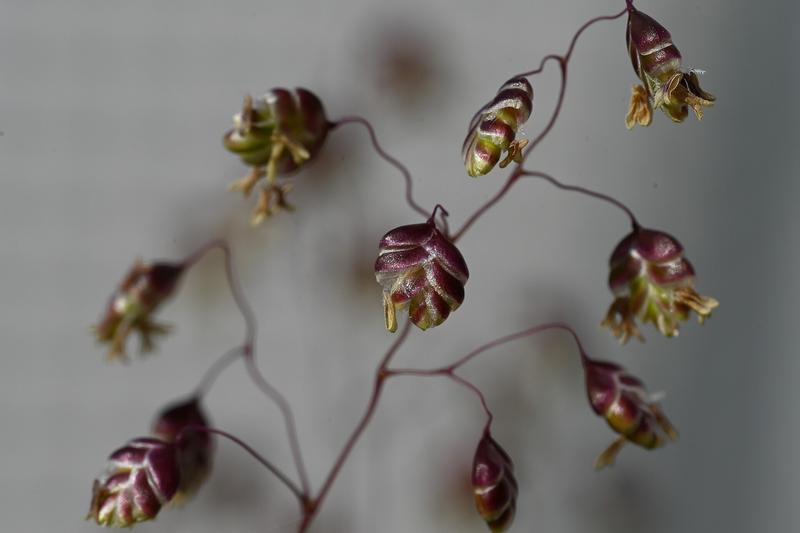
Quick facts
- Watering
- Minimal once established
- Sunlight
- Full sun to partial shade
- Soil
- Well-drained, alkaline to neutral
- Humans
- Safe
- Cats
- Safe
- Dogs
- Safe
- Height
- 30–60 cm
- Spread
- 20–30 cm
- Spacing
- 25–30 cm apart
- RHS recognition
- Award of Garden Merit
About Quaking Grass
Quaking Grass is a delicate perennial grass native to British meadows and grasslands, prized for its distinctive heart-shaped flower heads that tremble in the slightest breeze. Growing 30-60cm tall, it produces airy panicles of dangling, papery spikelets from late spring through summer, creating a graceful, shimmering effect in borders and naturalistic plantings. UK gardeners value it for prairie-style schemes, cottage gardens, and wildflower meadows, where it adds movement and texture whilst supporting native pollinators. The dried seed heads are also popular in floral arrangements and remain attractive well into autumn.
UK fact: Quaking Grass is a native British wildflower found in traditional hay meadows across the UK, particularly on calcareous grasslands, and has been used in rural folklore as a charm against trembling and shaking.
Watering Quaking Grass
Once established, Quaking Grass is remarkably drought-tolerant and requires little supplementary watering, even during dry UK summers. Water newly planted specimens weekly for the first growing season to help roots establish, then reduce to occasional deep watering during prolonged drought. Avoid overwatering, as this grass naturally thrives in free-draining conditions and can suffer from root rot in waterlogged soil. In containers, water when the top 3-5cm of compost feels dry.
Sunlight requirements
Quaking Grass thrives in full sun but tolerates partial shade, particularly in southern UK gardens where afternoon shade can prevent scorching during hot summers. In northern regions, a sunny south or west-facing position encourages the best flowering and seed head production. Avoid deep shade, which leads to weak, floppy growth and reduced flowering.
Soil and feeding
Quaking Grass prefers well-drained, moderately fertile soil with a neutral to alkaline pH (6.5-8.0), reflecting its native habitat on chalky grasslands. It tolerates poor, sandy, or stony soils and actually performs better in lean conditions than in rich, heavy ground. Improve drainage in clay soils by incorporating horticultural grit or sharp sand before planting. Avoid overly fertile or moisture-retentive soils, which encourage lush foliage at the expense of flowers and can reduce winter hardiness.
Quaking Grass requires minimal feeding and thrives in nutrient-poor conditions. Avoid fertilising established plants, as excess nitrogen produces soft, floppy growth prone to flopping and reduces the characteristic delicate appearance. If growing in containers, apply a weak liquid feed once in early spring.
Pruning Quaking Grass
Cut back faded foliage and spent flower stems to ground level in late winter or early spring (February-March) before new growth emerges. Alternatively, leave the attractive seed heads standing through winter for ornamental interest and to provide food for birds, then tidy in early spring. Deadhead during summer if you wish to prevent self-seeding, though many gardeners allow natural reseeding to create drifts. Quaking Grass is deciduous and dies back completely over winter.
Propagating Quaking Grass
Quaking Grass is easily propagated from seed sown in spring or autumn, either directly into prepared ground or in modules for transplanting. Spring sowings (March-May) germinate readily at 15-20°C and flower the same year, whilst autumn sowings overwinter as small plants and flower earlier the following season. Established clumps can be divided in spring (March-April) by lifting and teasing apart the root mass, replanting divisions immediately. Self-seeding is common in favourable conditions, and seedlings can be transplanted whilst small.
Common problems
Quaking Grass is largely trouble-free and suffers from few pests or diseases in UK gardens. Rust fungi can occasionally affect foliage in humid conditions, appearing as orange-brown pustules on leaves; improve air circulation and avoid overhead watering to minimise risk. Aphids may colonise young growth in spring but rarely cause significant damage. The main cultural problem is flopping in overly rich or shaded conditions; grow in lean, well-drained soil in good light for compact, self-supporting plants. Excessive moisture can lead to root rot, particularly in heavy clay soils.
Spot a problem with your plant? Photograph the affected area using the Loam app and it will suggest the most likely cause and treatment.
Safety
- Humans
- Safe
- Cats
- Safe
- Dogs
- Safe
Toxicity information is for general guidance only.
Seasonal care calendar
Monthly care guide for Quaking Grass in the UK, based on average conditions.
| Month | Care tasks |
|---|---|
| January | No action needed; plant is dormant. |
| February | Cut back dead foliage and stems to ground level before new growth begins. |
| March | Sow seeds outdoors or divide established clumps. New growth emerges. |
| April | Continue sowing seeds. Water newly planted specimens weekly. |
| May | Flower stems begin to emerge. Thin self-sown seedlings if overcrowded. |
| June | Flowering begins; enjoy the trembling seed heads. Deadhead to prevent self-seeding if desired. |
| July | Peak flowering period. Cut stems for fresh or dried arrangements. |
| August | Flowering continues. Allow seed heads to mature if you want self-seeding. |
| September | Collect ripe seed for sowing. Seed heads remain ornamental. |
| October | Foliage begins to fade. Leave seed heads for winter interest and wildlife. |
| November | Plant continues to provide structure. No action needed. |
| December | Dried seed heads offer winter interest. Leave standing until spring. |
Frequently asked questions
- Is Quaking Grass native to the UK?
- Yes, Quaking Grass (Briza media) is a native British wildflower found naturally in traditional hay meadows and calcareous grasslands across the UK, making it an excellent choice for wildlife-friendly and naturalistic planting schemes.
- Why is my Quaking Grass flopping over?
- Flopping usually indicates overly rich soil or insufficient light. Quaking Grass thrives in lean, well-drained conditions in full sun. The Loam app can help you diagnose growing problems and adjust care based on your specific garden conditions.
- Can I grow Quaking Grass in a container?
- Yes, Quaking Grass grows well in containers filled with gritty, free-draining compost. Choose a pot at least 20cm wide, ensure good drainage, and avoid overwatering or feeding, as this grass prefers lean conditions.
Got a question about growing Quaking Grass that isn't covered here? Ask the Garden Advisor in the Loam app. It knows your saved plants and local conditions.
Related plants
This page was compiled with AI assistance and reviewed by our team. .