Blue Lyme Grass
Leymus arenarius
Grasses and Ferns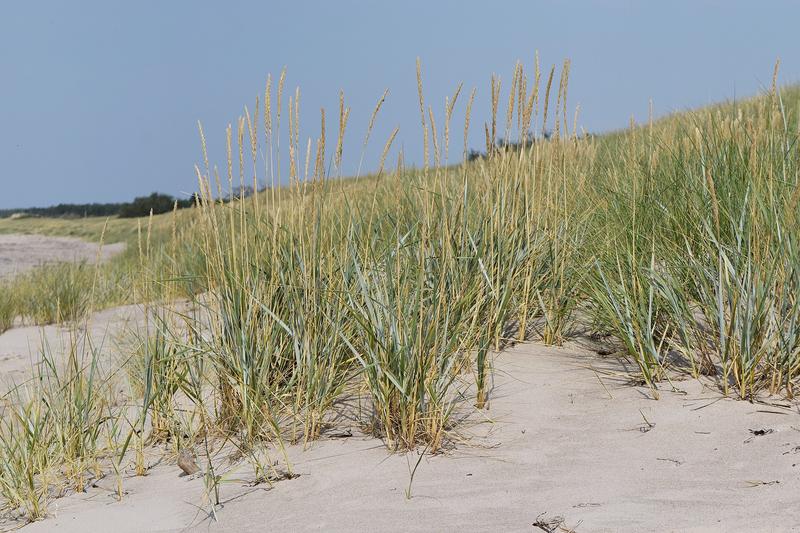
Quick facts
- Watering
- Fortnightly once established
- Sunlight
- Full sun to partial shade
- Soil
- Well-drained, sandy or gravelly
- Humans
- Safe
- Cats
- Safe
- Dogs
- Safe
- Height
- 90–150 cm
- Spread
- 60–100 cm
- Spacing
- 75–100 cm apart
About Blue Lyme Grass
Blue Lyme Grass is a striking ornamental grass native to coastal regions of northern Europe, including the British Isles. Its distinctive steel-blue foliage creates dramatic architectural interest in borders and gravel gardens, with arching leaves reaching up to 1.5 metres tall. UK gardeners prize this hardy perennial for its ability to thrive in challenging conditions, particularly coastal gardens where salt tolerance is essential. The glaucous blue colouring intensifies in full sun, making it an excellent choice for contemporary planting schemes and prairie-style borders.
UK fact: Blue Lyme Grass is a native British species found naturally on sand dunes along the UK coastline, where it plays a vital role in stabilising shifting sands and preventing coastal erosion, particularly along the coasts of Scotland, Wales, and eastern England.
Watering Blue Lyme Grass
Once established, Blue Lyme Grass is remarkably drought-tolerant and requires minimal watering, typically only during prolonged dry spells in summer. Water newly planted specimens weekly during their first growing season to help establish a strong root system. In typical UK conditions with regular rainfall, mature plants rarely need supplementary watering except in very free-draining sandy soils during extended dry periods. Avoid overwatering, as this grass naturally thrives in lean, dry conditions.
Sunlight requirements
Blue Lyme Grass performs best in full sun, where its distinctive blue colouring is most intense and vibrant. It will tolerate partial shade but may become greener and less architectural in appearance. In UK gardens, a south or west-facing position is ideal, though coastal sites with strong light levels suit it particularly well.
Soil and feeding
Blue Lyme Grass thrives in poor to moderately fertile, free-draining soils and is particularly well-suited to sandy or gravelly conditions that mimic its native coastal habitat. It tolerates a wide pH range from slightly acidic to alkaline (pH 6.0-8.0) and performs exceptionally well in coastal gardens with salt-laden winds. Heavy clay soils should be improved with grit or sharp sand to ensure adequate drainage, as waterlogged conditions can lead to root rot. This grass actually performs better in lean soils, where its blue colouring is more pronounced and growth is more controlled.
Blue Lyme Grass requires minimal feeding and actually performs best in nutrient-poor conditions. Avoid fertilising established plants, as rich soil encourages excessive growth and reduces the intensity of the blue foliage colour. If growing in containers, a single application of balanced slow-release fertiliser in spring is sufficient.
Pruning Blue Lyme Grass
Cut back all foliage to ground level in late winter or early spring (February to March) before new growth emerges, using sharp secateurs or shears. This annual hard prune removes old, tatty leaves and encourages fresh blue growth for the coming season. Be aware that Blue Lyme Grass can spread vigorously via rhizomes, so consider installing a root barrier at planting time or regularly dig out unwanted shoots to control its spread. In smaller gardens, growing it in a large container can help manage its invasive tendencies whilst still enjoying its architectural qualities.
Propagating Blue Lyme Grass
Blue Lyme Grass is easily propagated by division in spring (March to April) or autumn (September to October). Lift established clumps with a garden fork and use a sharp spade or two forks back-to-back to divide the root mass into sections, ensuring each piece has healthy roots and shoots. Replant divisions immediately at the same depth, spacing them 75-100 cm apart, and water well until established. Division every 3-4 years also helps rejuvenate older clumps and control spread.
Common problems
Blue Lyme Grass is generally pest and disease-free, making it a low-maintenance choice for UK gardens. The main issue is its vigorous spreading habit via underground rhizomes, which can become invasive in favourable conditions and overwhelm neighbouring plants if not controlled. In very wet or poorly drained soils, the roots may be susceptible to rot, so ensuring good drainage is essential. Occasionally, rust fungus may appear as orange pustules on leaves during humid summers, though this rarely causes serious damage and can be managed by removing affected foliage and improving air circulation.
Spot a problem with your plant? Photograph the affected area using the Loam app and it will suggest the most likely cause and treatment.
Safety
- Humans
- Safe
- Cats
- Safe
- Dogs
- Safe
Toxicity information is for general guidance only.
Seasonal care calendar
Monthly care guide for Blue Lyme Grass in the UK, based on average conditions.
| Month | Care tasks |
|---|---|
| January | No action needed; foliage remains standing through winter for structural interest. |
| February | Cut back all old foliage to ground level before new growth begins. |
| March | Divide established clumps if needed; new blue shoots begin to emerge. |
| April | Monitor new growth and remove any unwanted spreading shoots to control spread. |
| May | Foliage develops rapidly; water newly planted specimens weekly. |
| June | Blue foliage reaches peak colour intensity; flower spikes begin to appear. |
| July | Wheat-like flower spikes mature; water during prolonged dry spells if needed. |
| August | Foliage remains attractive; continue watering only during extended drought. |
| September | Divide congested clumps if needed; foliage begins to fade slightly. |
| October | Leave foliage standing for winter structure and interest. |
| November | No action needed; architectural form provides winter interest. |
| December | No action needed; foliage catches frost and adds winter beauty. |
Frequently asked questions
- Is Blue Lyme Grass invasive in UK gardens?
- Yes, Blue Lyme Grass can be invasive as it spreads vigorously via underground rhizomes. To control it, install a root barrier at planting time, grow it in large containers, or regularly dig out unwanted shoots. It's best suited to larger gardens or coastal sites where its spreading habit is less problematic.
- Why is my Blue Lyme Grass turning green instead of blue?
- Blue Lyme Grass loses its distinctive blue colour when grown in shade, overly rich soil, or with excessive watering. The Loam app can help you track sunlight levels and watering schedules to maintain optimal blue colouring, and provide personalised advice based on your garden's specific conditions.
- When should I cut back Blue Lyme Grass?
- Cut back all foliage to ground level in late winter or early spring (February to March) before new growth emerges. This annual hard prune removes old leaves and encourages fresh blue growth. Leave the foliage standing through winter for structural interest and to protect the crown from frost.
Got a question about growing Blue Lyme Grass that isn't covered here? Ask the Garden Advisor in the Loam app. It knows your saved plants and local conditions.
Related plants
This page was compiled with AI assistance and reviewed by our team. .