Phlomis
Phlomis fruticosa
Shrubs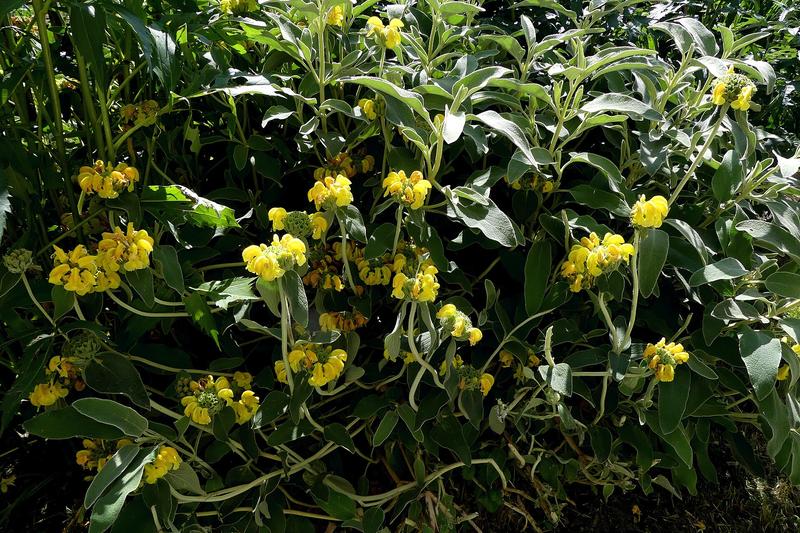
Quick facts
- Watering
- Fortnightly once established
- Sunlight
- Full sun
- Soil
- Well-drained, poor to moderately fertile
- Humans
- Safe
- Cats
- Safe
- Dogs
- Safe
- Height
- 90–120 cm
- Spread
- 90–150 cm
- Spacing
- 100–120 cm apart
- RHS recognition
- Award of Garden Merit
About Phlomis
Phlomis fruticosa is an evergreen Mediterranean shrub prized for its whorls of bright yellow flowers and distinctive grey-green felted foliage. Native to rocky hillsides of southern Europe, it has become a stalwart of British cottage gardens and gravel plantings. UK gardeners value its drought tolerance, long flowering season from late spring through summer, and architectural presence in sunny borders. The sage-like leaves remain attractive year-round, providing valuable winter structure in milder regions.
UK fact: Phlomis fruticosa holds the RHS Award of Garden Merit and thrives particularly well in coastal gardens across southern England, where its Mediterranean origins make it perfectly suited to free-draining soils and salt-laden winds.
Watering Phlomis
Water newly planted phlomis weekly during the first growing season to establish a deep root system. Once established, plants are remarkably drought-tolerant and typically need watering only during prolonged dry spells in summer, roughly every two weeks. Overwatering is the most common mistake in the UK climate; these Mediterranean natives prefer to stay on the dry side and can suffer root rot in waterlogged conditions. In winter, natural rainfall is almost always sufficient.
Sunlight requirements
Phlomis fruticosa requires full sun to flower profusely and maintain its compact, bushy habit. In the UK, position in south or west-facing borders where it receives at least six hours of direct sunlight daily. Plants grown in shade become leggy, produce fewer flowers, and are more susceptible to fungal issues in our damp climate.
Soil and feeding
Phlomis fruticosa thrives in free-draining soil and actually performs better in poor to moderately fertile conditions rather than rich ground. It tolerates a wide pH range from slightly acidic to alkaline (pH 6.0-8.0) and is particularly well-suited to chalky or sandy soils. Heavy clay soils must be improved with grit or gravel to ensure adequate drainage, as waterlogging will quickly kill the plant. Avoid adding organic matter or fertiliser at planting time, as overly rich soil encourages soft, frost-tender growth.
Phlomis fruticosa requires minimal feeding and actually flowers better in lean conditions. If growing in very poor soil, apply a light dressing of general-purpose fertiliser in early spring, but avoid high-nitrogen feeds which promote leafy growth at the expense of flowers. In most UK garden soils, no supplementary feeding is necessary.
Pruning Phlomis
Prune phlomis in mid to late spring (April) after the risk of hard frosts has passed, cutting back by about one-third to maintain a compact shape and encourage fresh growth. Deadhead spent flower stems in summer to prolong blooming and prevent the plant from becoming straggly. Avoid autumn pruning, as this stimulates tender new growth vulnerable to winter damage. Older, woody plants can be rejuvenated by harder pruning, but do this gradually over two to three years rather than cutting back severely all at once.
Propagating Phlomis
Phlomis fruticosa is easily propagated from semi-ripe cuttings taken in late summer (July to August). Select non-flowering shoots about 10cm long, remove the lower leaves, and insert into gritty compost in a cold frame or unheated greenhouse. Cuttings typically root within six to eight weeks. Alternatively, layer low-growing stems in spring by pegging them to the ground and covering with soil; these should root by autumn and can be severed from the parent plant the following spring.
Common problems
Phlomis fruticosa is generally trouble-free but can suffer from root rot in poorly drained soils or during wet UK winters, particularly on heavy clay. Powdery mildew may appear on foliage in humid conditions with poor air circulation, though this is rarely serious. Aphids occasionally colonise new growth in spring but can be controlled with a strong water spray or organic insecticidal soap. The main cultural problem is winter dieback in cold, exposed sites or after severe frosts, though plants often regenerate from the base in spring if the roots survive.
Spot a problem with your plant? Photograph the affected area using the Loam app and it will suggest the most likely cause and treatment.
Safety
- Humans
- Safe
- Cats
- Safe
- Dogs
- Safe
Toxicity information is for general guidance only.
Seasonal care calendar
Monthly care guide for Phlomis in the UK, based on average conditions.
| Month | Care tasks |
|---|---|
| January | No action needed. Avoid disturbing plants during cold weather. |
| February | Check for frost damage but resist pruning until spring. |
| March | Remove any winter-damaged growth as new shoots emerge. |
| April | Main pruning time: cut back by one-third to shape. Apply light feed if needed. |
| May | Water newly planted specimens weekly. Mulch lightly with gravel. |
| June | Flowering begins. Deadhead spent blooms to encourage more flowers. |
| July | Peak flowering period. Take semi-ripe cuttings for propagation. Water during dry spells. |
| August | Continue deadheading. Take final cuttings early in the month. |
| September | Reduce watering as autumn rains begin. Pot up rooted cuttings. |
| October | Leave seedheads for winter interest and structure. No pruning. |
| November | Protect young plants in exposed sites with fleece during severe weather. |
| December | No action needed. Evergreen foliage provides winter structure. |
Frequently asked questions
- Why is my phlomis not flowering?
- Phlomis fruticosa fails to flower when grown in shade, overfed with nitrogen-rich fertiliser, or planted in soil that's too rich. Ensure your plant receives full sun for at least six hours daily and avoid feeding. Hard pruning too late in the season can also remove flower buds, so prune only in April.
- How do I know when my phlomis needs watering?
- Established phlomis is drought-tolerant and rarely needs watering in the UK except during prolonged dry spells. The Loam app can send you personalised watering reminders based on your local weather conditions and soil type, helping you avoid the common mistake of overwatering this Mediterranean shrub.
- Can phlomis survive a British winter?
- Yes, Phlomis fruticosa is hardy to around -10°C and survives most UK winters, particularly in southern and coastal regions. In colder areas or exposed sites, provide winter protection with fleece during severe frosts. Good drainage is essential, as plants are more likely to succumb to winter wet than cold temperatures alone.
Got a question about growing Phlomis that isn't covered here? Ask the Garden Advisor in the Loam app. It knows your saved plants and local conditions.
Related plants
This page was compiled with AI assistance and reviewed by our team. .