Mugwort
Artemisia vulgaris
Herbs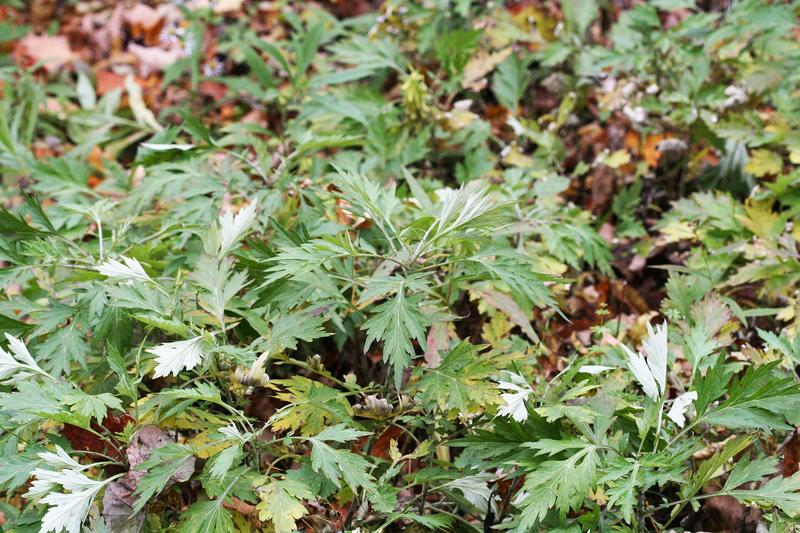
Quick facts
- Watering
- Minimal once established
- Sunlight
- Full sun to partial shade
- Soil
- Well-drained, any soil type
- Humans
- Toxic
- Cats
- Toxic
- Dogs
- Toxic
- Height
- 90–180 cm
- Spread
- 60–120 cm
- Spacing
- 60–90 cm apart
About Mugwort
Mugwort is a vigorous herbaceous perennial native to temperate Europe, Asia and North Africa, with deeply divided dark green leaves and silvery undersides. Growing 90–180 cm tall, it produces inconspicuous reddish-brown flower spikes in late summer and has a distinctive aromatic scent. UK gardeners grow it for its traditional medicinal uses, wildlife value, and as a hardy ornamental for wild gardens, though it can be invasive if not managed. Its feathery foliage provides excellent textural contrast in herbaceous borders.
UK fact: Mugwort has been used in Britain since Anglo-Saxon times as one of the nine sacred herbs in the 'Nine Herbs Charm', and was traditionally hung over doorways on St John's Eve to ward off evil spirits and ensure good fortune.
Watering Mugwort
Mugwort is extremely drought-tolerant once established and requires minimal watering in the UK climate. Newly planted specimens benefit from weekly watering during their first summer, but established plants thrive on rainfall alone. Overwatering can lead to excessive, invasive growth and reduced aromatic oil concentration in the foliage. In containers, water when the top 5 cm of compost feels dry.
Sunlight requirements
Mugwort thrives in full sun but tolerates partial shade, making it versatile for various UK garden positions. In shadier spots, growth may be less vigorous and the silvery leaf undersides less pronounced. South or west-facing positions are ideal, though it will grow happily in east-facing borders with morning sun.
Soil and feeding
Mugwort is remarkably unfussy about soil and will grow in almost any well-drained ground, from sandy to clay. It actually performs best in poor to moderately fertile soil, as rich conditions encourage rampant, invasive growth. A pH range of 5.5–8.0 is tolerated, making it suitable for most UK gardens. Avoid waterlogged sites, as this can lead to root rot in winter.
Mugwort requires no feeding and actively thrives in poor soil conditions. Applying fertiliser encourages excessive vegetative growth and can make the plant more invasive, whilst reducing the concentration of aromatic compounds. If growing in containers, a single application of diluted liquid feed in spring is sufficient.
Pruning Mugwort
Cut back flowering stems in late summer after blooming to prevent self-seeding and control spread. In late autumn or early spring, cut all growth back to ground level to maintain tidiness and encourage fresh foliage. Regular pruning of underground runners is essential to prevent invasive spread—dig out unwanted rhizomes as soon as they appear beyond the desired area. For a bushier habit, pinch out growing tips in late spring.
Propagating Mugwort
Mugwort propagates readily from division of established clumps in spring or autumn, making this the easiest method for UK gardeners. Simply dig up a section with roots attached and replant immediately. It also spreads vigorously via underground rhizomes, which can be separated and potted up. Seed propagation is possible by sowing fresh seed in autumn in a cold frame, though germination can be erratic and plants may take two years to reach maturity.
Common problems
Mugwort is remarkably pest and disease-free in UK gardens, with few significant problems. The main issue is its invasive nature—vigorous rhizomes can quickly colonise borders and lawns if not contained by root barriers or regular removal. Aphids occasionally colonise young shoots in spring but rarely cause serious damage. In very wet conditions or heavy clay, crown rot can occur over winter, though this is uncommon with proper drainage.
Spot a problem with your plant? Photograph the affected area using the Loam app and it will suggest the most likely cause and treatment.
Safety
- Humans
-
Toxic
Contains thujone and other compounds that can be toxic in large quantities. Internal consumption should be avoided, especially by pregnant women, as it can cause uterine contractions. Skin contact may cause dermatitis in sensitive individuals.
- Cats
-
Toxic
Contains volatile oils and thujone which can cause vomiting, diarrhoea, and neurological symptoms if ingested. Keep cats away from this plant.
- Dogs
-
Toxic
Contains thujone and volatile oils that can cause vomiting, diarrhoea, tremors, and seizures if consumed in quantity. Prevent dogs from eating this plant.
Toxicity information is for general guidance only. If a person or pet has been exposed to this plant and you are concerned, seek advice from a medical professional or vet.
Seasonal care calendar
Monthly care guide for Mugwort in the UK, based on average conditions.
| Month | Care tasks |
|---|---|
| January | No action needed; plant is fully dormant. |
| February | Cut back any remaining dead stems to ground level if not done in autumn. |
| March | New shoots emerge; divide established clumps if required. Check for spreading rhizomes and remove unwanted growth. |
| April | Plant new specimens. Monitor for aphids on young growth and remove by hand if necessary. |
| May | Pinch out growing tips for bushier growth. Continue monitoring for invasive spread. |
| June | Foliage at its best; harvest leaves for drying if required. Remove any unwanted runners. |
| July | Flower buds begin to form. Continue controlling spread by removing rhizomes. |
| August | Flowers appear; cut back after flowering to prevent self-seeding if desired. |
| September | Divide established clumps if required. Remove spent flower heads to control spread. |
| October | Foliage begins to die back. Cut to ground level or leave for winter structure. |
| November | Complete autumn cutback if desired. Check root barriers are intact. |
| December | No action needed; plant is dormant. |
Frequently asked questions
- Is mugwort invasive in UK gardens?
- Yes, mugwort can be highly invasive due to its vigorous underground rhizomes that spread rapidly. Plant it in containers or install root barriers at least 45 cm deep to contain it. Regular removal of runners beyond the desired area is essential to prevent it colonising lawns and borders.
- How do I stop my mugwort from taking over the garden?
- Install a root barrier, grow in containers, and regularly inspect for spreading rhizomes, removing them as soon as they appear. The Loam app can send you monthly reminders to check for invasive growth and help you track which areas need attention throughout the growing season.
- When should I harvest mugwort leaves for drying?
- Harvest mugwort leaves just before flowering in June or early July when aromatic oil concentration is highest. Cut stems in the morning after dew has dried, then hang in bunches in a warm, dark, well-ventilated space. Dried leaves retain their properties for up to a year when stored in airtight containers.
Got a question about growing Mugwort that isn't covered here? Ask the Garden Advisor in the Loam app. It knows your saved plants and local conditions.
Related plants
This page was compiled with AI assistance and reviewed by our team. .