Lychnis
Lychnis coronaria
Perennials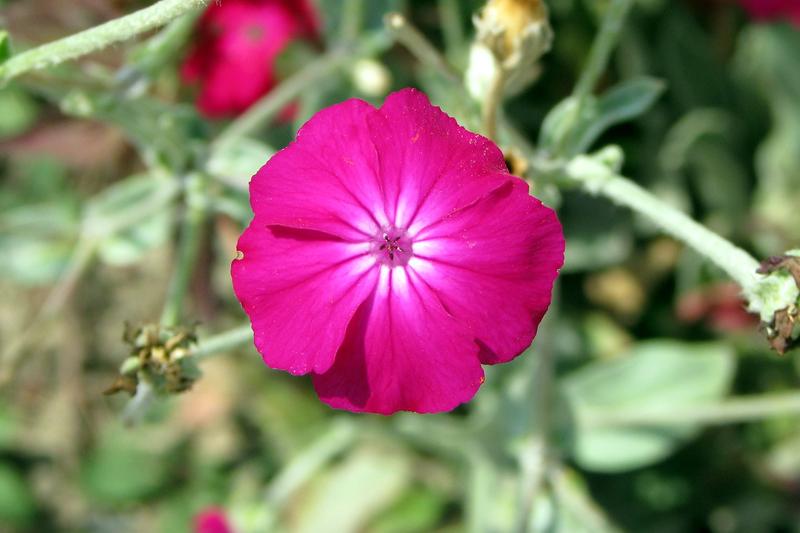
Quick facts
- Watering
- Fortnightly once established
- Sunlight
- Full sun
- Soil
- Well-drained, poor to moderately fertile
- Humans
- Unknown
- Cats
- Unknown
- Dogs
- Unknown
- Height
- 60–90 cm
- Spread
- 30–45 cm
- Spacing
- 30–45 cm apart
- RHS recognition
- Award of Garden Merit
About Lychnis
Lychnis coronaria, commonly known as rose campion, is a striking short-lived perennial prized for its vivid magenta flowers and silvery-grey felted foliage. Native to southern Europe, it has naturalised in parts of the UK and thrives in cottage gardens and gravel plantings. British gardeners value it for its drought tolerance, long flowering period from June to August, and ability to self-seed freely in well-drained soils. The soft, woolly leaves provide year-round interest, creating beautiful contrasts with green-leaved companions.
UK fact: Lychnis coronaria has been awarded the RHS Award of Garden Merit and has been grown in British gardens since the 16th century, where it was a favourite in Elizabethan knot gardens and remains a cottage garden staple today.
Watering Lychnis
Once established, lychnis is remarkably drought-tolerant and requires watering only during prolonged dry spells, typically every two weeks in summer. Newly planted specimens need regular watering for the first growing season until roots are established. Overwatering is the most common mistake, as the felted foliage is prone to rotting in wet conditions. In typical UK summers, established plants often manage on rainfall alone, though container-grown specimens need more frequent attention.
Sunlight requirements
Lychnis coronaria performs best in full sun, requiring at least six hours of direct sunlight daily to produce abundant flowers and maintain compact growth. In the UK, a south or west-facing position is ideal, though it will tolerate some light shade in hotter southern regions. Insufficient light results in leggy growth and reduced flowering, whilst the silvery foliage colour intensifies with good sun exposure.
Soil and feeding
Lychnis coronaria thrives in well-drained soil and actually performs better in poor to moderately fertile conditions, as rich soil encourages lush foliage at the expense of flowers. It tolerates a wide pH range from slightly acidic to alkaline (pH 6.0-8.0) and excels in sandy, gravelly, or chalky soils. Heavy clay soils must be improved with grit or sharp sand to ensure adequate drainage, as waterlogged roots lead to crown rot. The plant's Mediterranean origins make it perfectly suited to dry, free-draining spots that challenge other perennials.
Lychnis requires minimal feeding and actually flowers more profusely in lean soils. A single application of a balanced general-purpose fertiliser in early spring is sufficient, or omit feeding altogether if the plant is growing vigorously. Excessive feeding produces soft, floppy growth that is prone to disease and reduces the intensity of the silvery foliage.
Pruning Lychnis
Deadhead spent flowers regularly throughout summer to prolong blooming and prevent excessive self-seeding, though leaving some seedheads allows for natural regeneration. Cut back the entire plant to basal foliage in late autumn or early spring before new growth emerges. As lychnis is short-lived (typically 2-3 years), allow some self-seeding to ensure continuity, or take cuttings to propagate replacements. Remove any damaged or rotted foliage promptly, particularly after wet winters.
Propagating Lychnis
Lychnis coronaria propagates readily from seed, either self-sowing naturally or sown in spring or autumn in pots or directly in the ground. Seeds germinate best with light, so barely cover them with compost, and expect seedlings within 2-3 weeks at 15-20°C. Basal cuttings can be taken in spring from healthy shoots, rooted in gritty compost with good drainage. Division is possible but often unsuccessful due to the plant's short taproot, making seed propagation the most reliable method for maintaining stock.
Common problems
Lychnis coronaria is generally trouble-free but can suffer from crown rot and root rot in poorly drained or waterlogged soils, particularly during wet UK winters. Aphids occasionally colonise young shoots and flower buds in spring, though they rarely cause serious damage. Slugs and snails may nibble young seedlings but typically avoid the felted mature foliage. The plant's short lifespan (2-3 years) is not a disease but a natural characteristic, so plan for succession through self-seeding or propagation.
Spot a problem with your plant? Photograph the affected area using the Loam app and it will suggest the most likely cause and treatment.
Safety
- Humans
-
Unknown
No confirmed toxicity data available, though not considered edible. Handle with care and avoid ingestion.
- Cats
-
Unknown
No specific toxicity data available for cats. Monitor pets and contact a vet if ingestion occurs.
- Dogs
-
Unknown
No specific toxicity data available for dogs. Monitor pets and contact a vet if ingestion occurs.
Toxicity information is for general guidance only. If a person or pet has been exposed to this plant and you are concerned, seek advice from a medical professional or vet.
Seasonal care calendar
Monthly care guide for Lychnis in the UK, based on average conditions.
| Month | Care tasks |
|---|---|
| January | No action needed; plants are dormant with basal rosettes visible. |
| February | Check for winter damage and remove any rotted foliage. |
| March | Cut back old stems if not done in autumn. Sow seeds under cover or take basal cuttings. |
| April | Plant out new specimens. Apply light general-purpose fertiliser if desired. |
| May | Water newly planted lychnis regularly. Thin self-sown seedlings to desired spacing. |
| June | Flowering begins. Deadhead spent blooms to prolong display. |
| July | Continue deadheading. Water during prolonged dry spells. |
| August | Flowering continues. Collect seed if desired or allow some self-seeding. |
| September | Flowering finishes. Sow fresh seed directly outdoors for next year. |
| October | Cut back spent stems or leave seedheads for winter interest and self-seeding. |
| November | Tidy basal rosettes and ensure good drainage around crowns. |
| December | No action needed; plants are dormant. |
Frequently asked questions
- Why is my lychnis dying after two years?
- Lychnis coronaria is naturally short-lived, typically lasting only 2-3 years. This is normal behaviour, not a sign of poor care. The plant compensates by self-seeding freely, so allow some seedheads to develop for natural replacement, or propagate from seed or cuttings to maintain continuity in your border.
- How do I stop lychnis taking over my garden?
- Deadhead flowers before they set seed to prevent excessive self-seeding, or use the Loam app to set monthly reminders for deadheading during the flowering season. Remove unwanted seedlings when small, as they're easy to pull from well-drained soil. You can also grow lychnis in gravel gardens where seedlings are more visible and manageable.
- Can lychnis grow in shade?
- Lychnis coronaria requires full sun to thrive and will not perform well in shade. Shaded plants become leggy, produce fewer flowers, and are more susceptible to fungal problems. Choose a sunny, well-drained spot for best results, ideally receiving at least six hours of direct sunlight daily.
Got a question about growing Lychnis that isn't covered here? Ask the Garden Advisor in the Loam app. It knows your saved plants and local conditions.
This page was compiled with AI assistance and reviewed by our team. .